Old newspapers are the best record most Oklahoma towns have. Before statehood and long after, the weekly paper printed who bought what lot, who taught which grade, who died, who married and what the council voted. If you want to research your town, the work starts in Oklahoma News archives of the digitized and microfilmed kind, not in a courthouse drawer.
The good news: you can do most of this from home, for free, in an afternoon. The rest takes a road trip and a roll of microfilm. This guide walks through both, step by step, with the habits that separate a productive search from a frustrated one.
Merriam-Webster defines research as, in one sense, a "careful or diligent search." That is exactly the right frame here. Newspaper research rewards patience and method, not luck.
Why Do Old Newspapers Matter for Local History?
A newspaper was the town's memory. It recorded the ordinary business that official records skip: the new hardware store's opening week, the school play cast list, the extension voted on the water line. Genealogists use the birth, marriage and death notices. Property researchers use the legal notices, which counties were required to publish. Anyone tracing a Main Street building will find more in the paper than in any single deed. This connects to our earlier piece, Who Pays for Operation SAFE? State-City Line Gets Tested.
Newspapers also carry the texture official records lack. A minute book tells you the council approved a bridge. The paper tells you what the editor thought about the price of it.
Where Do Digitized Oklahoma Newspaper Archives Live?
Start with the free, national collections before anything else. The Library of Congress maintains a searchable database of digitized historic newspapers from around the country, including Oklahoma titles, through its Chronicling America project. The Oklahoma Historical Society has run a long-running newspaper digitization effort of its own and makes many Oklahoma titles searchable online. Both are free to use.
A few practical notes on these collections:
- Coverage is uneven. A big-city daily may be digitized back to its founding while a neighboring county weekly has only a few years online.
- Search works on text the computer has read from the page image. Old type, tight columns and poor scans produce errors, so try name spellings several ways.
- If a digitized run ends before the years you need, the microfilm usually continues. Digitization is a project in progress, not a finished record.
Check the local public library too. Many Oklahoma libraries subscribe to paid newspaper databases and offer free remote access with a library card. The librarian is often the single best resource you will find.
What If the Paper You Need Is Only on Microfilm?
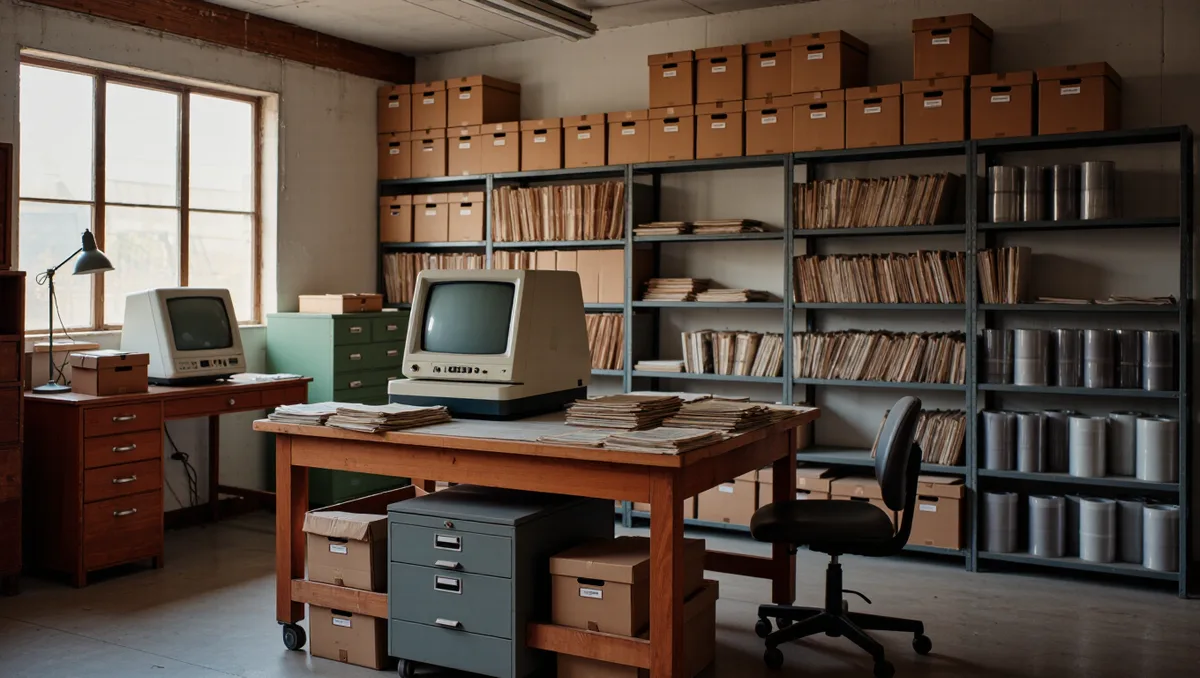
Microfilm is not as intimidating as it sounds. Small-town weeklies that never got digitized usually survive on film, held by the state historical society, a university library or the county library where the paper was published. Most institutions will lend film through interlibrary loan to your home library, or make copies of specific pages for a modest fee.
Before you request anything, do this:
- Identify the exact title and the years you need. County histories and library catalogs list which papers served a town and when.
- Call or email the holding institution and ask what they hold for those years. Holdings have gaps; verify before you travel.
- Ask about scanning or photocopy services. A staff member can often pull a page faster than you can.
If you visit in person, bring a list of names, dates and events to check. Open-ended browsing through a decade of film will eat a whole day.
How Do You Search Old Newspaper Pages Effectively?
Search engines for old papers are literal. They find the letters you type, nothing more. That means the burden of imagination falls on you.
Our analysis of what works: search for the event, not just the name. A person who never made the front page may appear in a school honor roll, a club meeting note or an auction listing. Try these moves:
- Search surname alone when a first name keeps failing. Optical character recognition mangles initials and hyphenated names.
- Search street addresses, business names and church names. These catch people who never appear by name in a headline.
- Browse by date when search fails. If you know a fire happened in a given month, read that month. It is slow and it works.
- Check neighboring towns' papers. A county seat weekly covered the whole county, including your town.
Keep a simple log of what you searched and where. Six months from now, you will not remember which database you already tried with which spelling.
What This Means for Your Family and Property Research
For genealogy, newspapers fill the gaps between census years and vital records. An obituary can name parents, siblings, a church and a burial place in one column. For a house or downtown building, legal notices and business ads establish when a structure changed hands or opened its doors. For civic questions, such as when a town incorporation vote happened or how a bond issue fared, the paper is often the fullest surviving account.
Pair what you find with other records. A newspaper item is a lead; a deed, a census entry or a meeting minute confirms it. Historians treat any single source with care, and so should you. Even a careful or diligent search, as the dictionary would put it, benefits from a second witness.
Local history is also a community project. If you turn up material worth sharing, county historical societies and library genealogy rooms welcome it, and our own community coverage often grows out of what residents dig up. The same goes for the commercial side of a town's past; readers tracing an old family store may find useful context in our business section.
What Should You Do When You Hit a Wall?
Every search hits gaps. Fires, floods and budget cuts destroyed runs of papers across the state, and no archive is complete. When you stall, widen the circle: ask the historical society, ask the county clerk what newspapers the county legally subscribed to, and ask a university collection with Oklahoma holdings. Someone usually knows where a missing run survives, even partially. Readers following this should also see Oklahoma's 2026 Session Hits Its May 29 Finish Line.
What the record establishes is this: Oklahoma's newspapers, on film and online, remain the richest open account of how the state's towns actually lived. What remains unknown is what any single search will find. That uncertainty is the work. Bring a list, keep a log, and go one roll of film at a time.