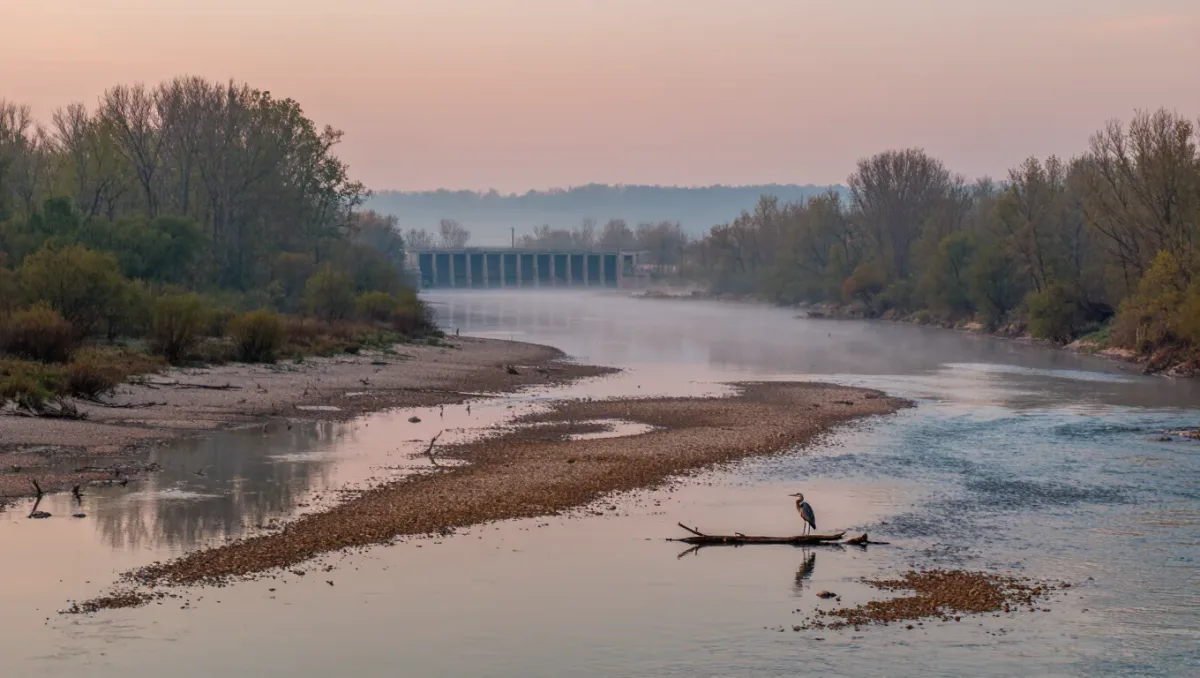
Tulsa's relationship with the Arkansas River is engineered from end to end. Keystone Dam, completed upstream in 1964, provides the flood control that ended the era of regular devastating floods and supplies the hydropower and water supply the metro still draws on, per the U.S. Army Corps of Engineers. Downstream, the McClellan-Kerr Navigation System — a chain of locks and dams completed in 1971 — made the river navigable to the Port of Catoosa. In between, the city's low-water dams pool the river into the flat water its river parks and Zink Lake recreation depend on.
The next round of river projects — rebuilding aging low-water structures and extending the recreational pool — now has to work within a system whose two jobs, flood safety and amenity, pull in opposite directions more often than they used to.
What does the existing dam system do?
The system divides by function. Keystone, a Corps flood-control structure, catches and meters the river's upstream runoff; its releases decide the flow Tulsa sees. The navigation dams below the city maintain the barge channel to Catoosa, holding pools deep enough for commercial tow traffic. The local low-water dams, including the rebuilt Zink Dam, hold shallow recreational pools inside the city — amenities with no navigation or hydropower function, per the City of Tulsa's riverfront materials.
Each layer answers to a different owner: the Corps for the federal structures, the port authority for navigation interests, the city for the local dams. That fragmentation is why Tulsa river policy moves in decades — every project crosses multiple jurisdictions and funding authorities.
What did the 2019 flood change?
May and June of 2019 remain the system's live stress test. Record rainfall upstream forced Keystone into sustained record releases, and the Arkansas River through Tulsa rose higher than at any point in the reservoir era, flooding low-lying areas and closing the river parks for weeks, per Corps reporting. No structure failed — the system worked as designed — but the flood reset public expectations: the river that holds the city's kayaks can, in the same season, take out the neighborhoods beside it.
The 2019 experience now shadows every river proposal. Floodplain mapping, insurance costs, and the placement of any new riverside investment are all evaluated against what the river demonstrated it can do, and the recreational-pool plans that once talked confidently about riverside development now site their ambitions more carefully.
What is the case for more low-water dams?
The amenity logic runs through Zink Lake's results: a rebuilt, gated low-water dam holds dependable flat water, and dependable flat water carries paddling traffic, events, and adjacent investment. Tulsa's river plan has contemplated additional structures extending the recreational pool, and each proposal promises a version of the Zink effect — turning a seasonal mud-bed channel into an all-season water amenity, per city planning records.
The counterweights are sediment (low-water dams trap it and must be managed), environmental review over the river's natural flow, and cost — gate structures like Zink's run into the tens of millions, and the public-funding packages that would carry them compete with streets, parks, and everything else on a bond menu.
How does the navigation system figure in?
The McClellan-Kerr system is the river's economic spine — the reason the Port of Catoosa exists — and its health constrains everything upstream. Navigation pools, lock maintenance schedules, and the Corps' river management all interact with the city's recreation goals, and the two interests align more than they conflict: water in the channel serves both barges and, indirectly, the pools above. The port's cargo volumes make the case for maintaining the federal investment, per Corps and port reporting.
How do the river parks fit the system?
The River Parks trail corridors that run the city’s banks are the system’s public face and its political constituency. Created over the 1970s and 1980s through a joint authority of the city and county, the trails turned the river’s riparian strip into Tulsa’s most-used recreation asset, and that usage base is why river projects poll well: voters who run, ride, or paddle the corridors see the water as personal infrastructure. Every dam proposal in the modern era has been marketed through the trails — better views, dependable water, connected destinations — because the recreation constituency is the one that votes.
The corridors also carry the system’s recurring conflicts. Encampments, trail crowding, and the tension between riverside development and public access all surface along the same linear park, and the authority’s budget — modest relative to the corridor’s importance — is a standing item in city-county funding negotiations.
For the dam decisions ahead, the trails matter analytically too: usage counters along the corridor are the best public evidence of what the river corridor is worth in daily use, and any honest cost-benefit on the next low-water dam starts with those numbers rather than with renderings.
The wider frame is regional: the Arkansas runs from Kansas through Oklahoma to Arkansas, and Tulsa’s reach sits inside interstate compacts and Corps basin management that constrain how much water the city can claim to hold back for its pools. River policy in Tulsa is, in the end, water law wearing running shoes.
What to watch next
Watch the Corps' Keystone and navigation maintenance programs, the city's next river-funding decisions in its capital packages, and the sediment and operations record at Zink Lake — the data set that will decide whether Tulsa's next low-water dam gets built. The river is already engineered; the question is whose version of the engineering comes next.