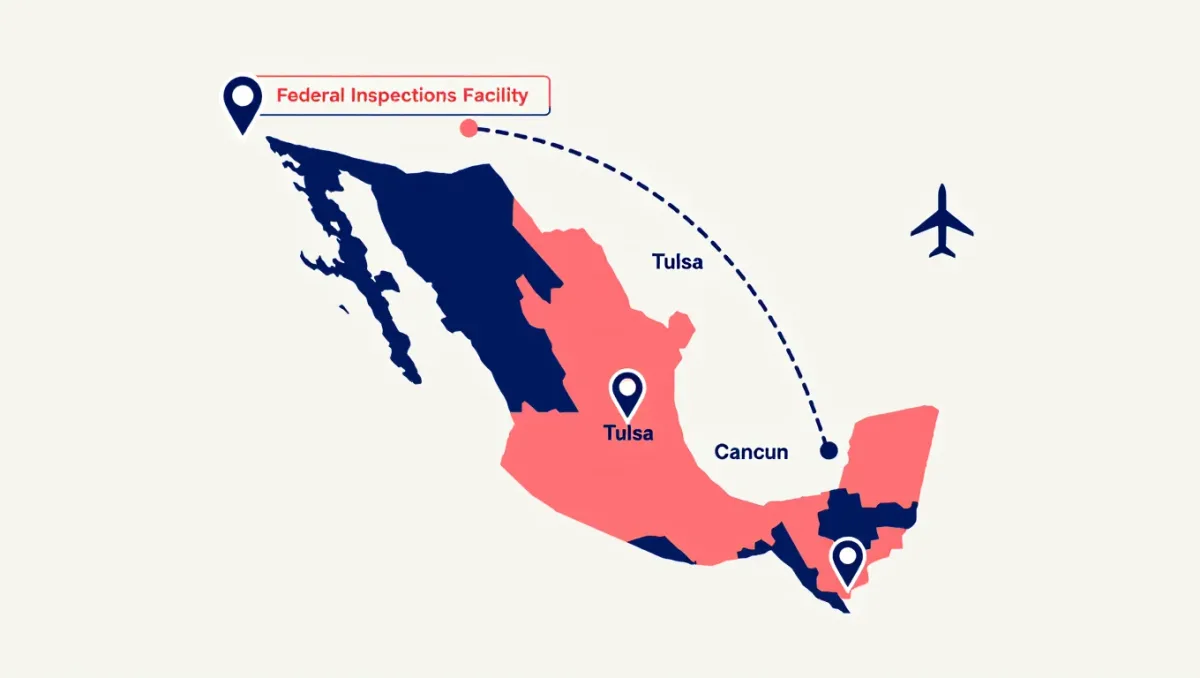
Tulsa International Airport enters the month it becomes an international commercial gateway. Per the Tulsa Airport Authority, the airport's new federal inspections facility — a roughly 45,000-square-foot terminal addition with customs and border inspection capacity — is being commissioned this month, and Sun Country Airlines launches the airport's first nonstop international commercial route, Tulsa to Cancún, on May 21.
The project carries a price tag of about $41 million, per the airport authority, and adds a general-aviation customs component alongside the commercial inspection hall — extending international capability to private and corporate arrivals as well as scheduled service.
Why does the facility matter?
Federal inspection services — the customs, immigration, and agriculture screening that processes international arrivals — are the license an airport needs to receive flights from abroad commercially. Without FIS capacity, Tulsa-bound international travelers cleared through connecting hubs, and the airport's international story was limited to cargo and private flights. The new addition moves that function in-house for the first time in the terminal era, per the airport authority's project materials.
The Cancún route is the commercial proof of concept. Mexican beach destinations draw heavily from Oklahoma's leisure market, and every Tulsa traveler flying that route previously connected through Dallas, Houston, or Atlanta to clear customs elsewhere. The route also gives the airport a operating history of international commercial service to present to other carriers when future route bids come up.
What else is changing at the airport?
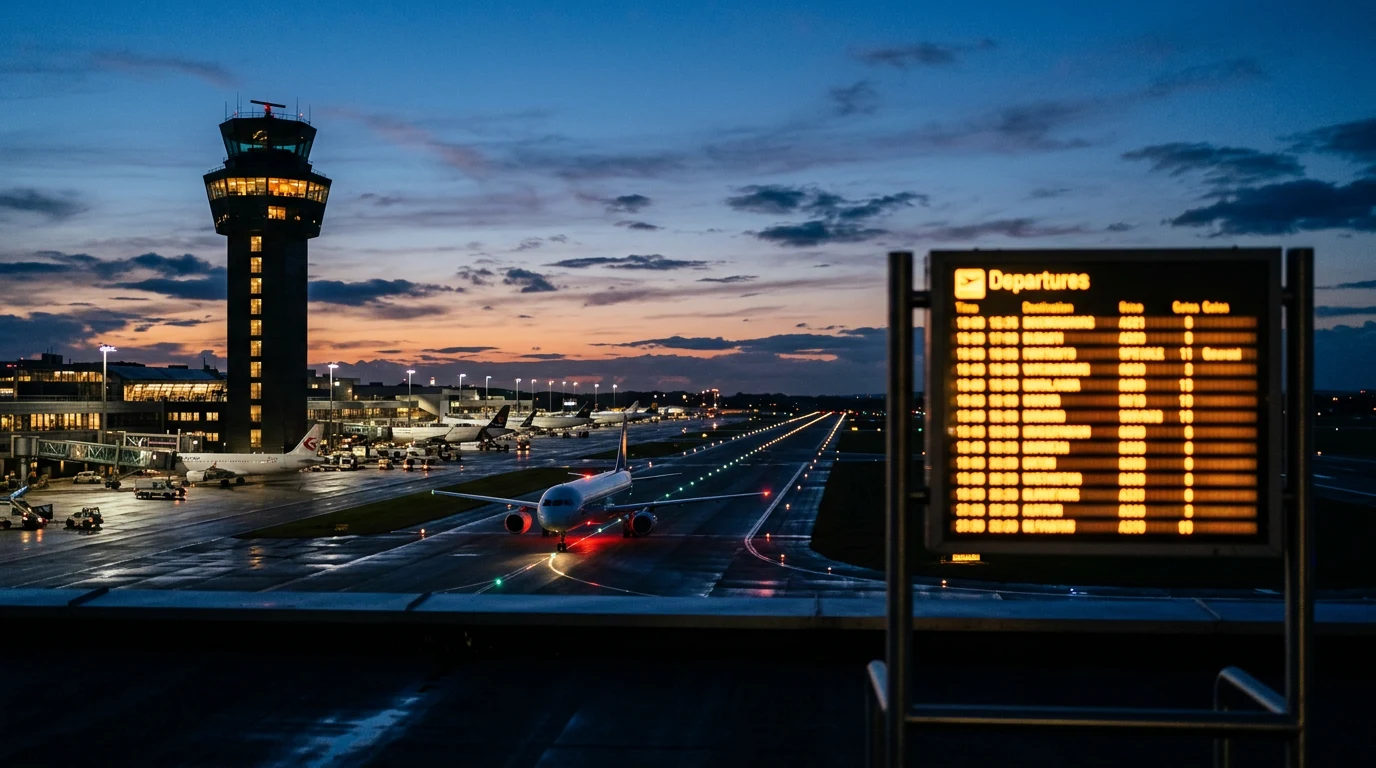
The FIS addition lands in the middle of a broader construction cycle. A new air traffic control tower — built by Flintco, with construction running from late 2024 into 2026 — is moving toward FAA equipment installation scheduled for the winter, per the airport authority. The tower is the most operationally significant project at the airport in decades, replacing a facility that predates the terminal's current traffic profile.
The airport is also working from a long-term master plan and a five-year capital improvement plan that sequence terminal seating, gate, and airfield investments, per its published planning documents — the standard federal planning frame, but one that now includes international-operations assumptions it did not carry before.
What does international service mean economically?
Airports and chambers make two arguments for international capability. The direct one is leakage: Oklahoma leisure travelers spend their travel budgets through connecting hubs, and a nonstop recaptures a share of that spending locally. The indirect one is corporate: international arrivals capability factors into site-selection decisions for foreign-headquartered companies, and northeast Oklahoma's aerospace and energy employers — with overseas parents and partners — gain a practical convenience in private-flight customs clearance at home.
The measurable baseline matters for accountability: enplanement counts, route performance, and the tower's commissioning timeline are all public, and the airport's case for the next round of route bids will be built on how the Cancún flight performs in its first year.
How will travelers use the new facility?
Arriving international passengers deplane to the inspections hall, clear customs and border protection there, and connect to the domestic terminal — the standard FIS flow. Departing international passengers check in through the main terminal as usual. For the Cancún route, the practical notes are passport validity for Mexican travel, and the fact that connecting itineraries beyond Tulsa now work in both directions: an international arrival can clear in Tulsa and connect domestically the same afternoon.
How did Tulsa get here?
International commercial service has been the airport’s stated target through successive administrations, and the pieces arrived in sequence. The master plan identified international capability as a strategic gap. The authority secured federal and local capital for the inspections facility, breaking ground while the tower program ran in parallel. And the airline piece closed with Sun Country, an ultra-low-cost carrier whose leisure-route model fits the Cancún market and whose Tulsa presence gives the route a base. The sequencing matters because FIS capacity without a committed route is an empty hall, and a route without FIS is impossible — Tulsa had to land both in the same window.
The broader context is a competitive one. Oklahoma City and Northwest Arkansas have both expanded air service aggressively in recent years, and route recruitment — incentives, minimum-revenue guarantees, market-data pitches — is now standard practice across mid-size airports. Tulsa’s size puts it in the tier where every new route is won against a field of peer cities offering similar subsidies, which is why the airport’s economic-development framing has sharpened: enplanements are the metric the whole game scores on.
The tower completes the operational story because international and low-cost operations both stress air traffic capacity: more movements, tighter gates, and a control facility designed decades ago for a smaller schedule. Commissioning the tower and the FIS hall within a single year effectively resets the airport’s operating baseline.
What happens at the inspections hall day one?
The first weeks of FIS operations are a staffing and process story as much as a ribbon story. Customs and border protection staffing levels, processing times for arriving flights, and the agriculture-screening workload all settle in over the route’s first season, and early operating data shapes whether additional international carriers see Tulsa as a workable port. The general-aviation side of the facility ramps on a separate track, clearing corporate and private international arrivals that previously filed through other ports.
For travelers, the near-term test is simple: does the Cancún nonstop hold its schedule through the summer season, and do the connecting itineraries priced around it survive contact with demand. Airline route decisions beyond year one follow exactly that data.
What to watch next
Watch the May 21 launch and the route's early load factors, the FIS facility's first months of processing volumes, and the tower program through its winter equipment milestone. Tulsa has pursued international commercial service for years; May is when the claim becomes testable.