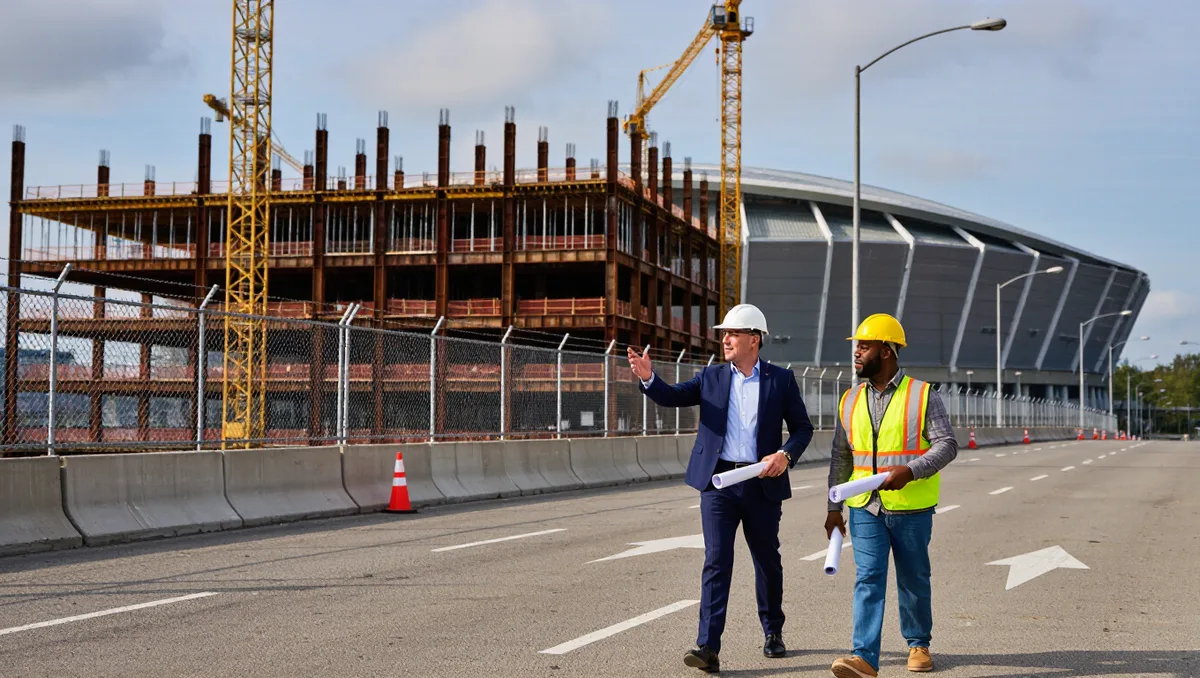
Most big projects that stall in Tulsa do not die. They sit. A site stays fenced, a sign fades, and neighbors assume the worst. Then, sometimes years later, the same corner reappears with a new builder, a smaller plan, or a different use entirely. That limbo — announced, delayed, doubted, and sometimes revived — is what people in the trade call development hell.
The projects that escape it tend to share three habits. They keep their financing flexible rather than fixed to one moment in the credit market. They adjust scope before they adjust quality. And they treat a stalled approval not as a defeat but as information about what the city, the lenders, and the market will actually accept. This piece walks through why projects stall, what revives them, and what a resident watching a fenced lot can reasonably conclude from the outside.
One note on language before the mechanics. The word "major" carries its plain meaning here — according to Dictionary.com, it simply means greater in size, extent, or importance — and that matters, because the projects most likely to enter development hell are precisely the ones big enough that many things must go right at once. For related coverage, see How Tulsa Pays for Big Projects: Bonds, Sales Tax, and the Vision Playbook.
Why do big projects stall in the first place?
A project stalls when one of its load-bearing assumptions fails. The four that fail most often are money, approvals, site conditions, and market timing. Each one alone can freeze a project. When two fail in the same quarter, the project usually goes quiet.
Money fails first and most often. Construction lending moves with interest rates and with lenders' appetite for risk. A pro forma — the spreadsheet that predicts what a building will cost and earn — is built on assumptions about rents, sale prices, and borrowing costs. When any of those shift, the math stops closing. The developer does not announce this. The project simply stops moving, because nobody signs a loan that loses money on paper.
Approvals fail second. Zoning, parking requirements, stormwater rules, and historic review all take time, and any one of them can send a plan back to the drawing board. Tulsa readers who want the mechanics can see how the rules actually work in our zoning and land use explainer. The practical point is that an approval delay is rarely fatal by itself. What kills projects is when the delay outlasts the financing lock or the developer's option on the land. This connects to our earlier piece, Zoning and Land Use in Tulsa: How Development Rules Actually Work.
Site conditions are the quiet killer. Soil that will not bear the planned foundation, utilities that must be upgraded at the developer's expense, floodplain lines that moved with a map update — these surface after purchase, when the option money is spent. And market timing is the cruelest: a project designed for a demand that arrived two years early or two years late can be perfectly built and perfectly unwanted.
What actually revives a stalled project?
Revival almost always involves one of four moves, and it helps to know them, because each leaves a visible fingerprint.
- Repricing. The plan shrinks until the math closes at today's costs. Twenty-four floors become fourteen. Underground parking becomes surface parking. The address stays; the ambition does not.
- Repositioning. The use changes. An office tower becomes apartments. A hotel becomes senior housing. Downtown Tulsa is living through this right now, as our look at office-to-housing conversion math explains — the buildings are not worth less, but what people will pay for inside them has changed.
- Relanding. The project moves. A developer with a signed anchor tenant but a problematic site will hunt for a cleaner parcel nearby. The project survives; the original lot becomes somebody else's problem.
- Rebudgeting with public money. Tax increment financing, bonds, or a voter-approved package can bridge the gap between what a project earns and what it costs. How that works, and what it obligates, is laid out in our TIF explainer and our piece on how Tulsa pays for big projects. Public money revives projects, but it also transfers part of the risk to taxpayers, which is why the terms deserve reading.
Notice what is absent from that list: a dramatic rescue. Revivals are usually accounting events, not ribbon-cuttings. The fence comes down because a spreadsheet finally closed.
How can you tell a dead project from a sleeping one?
You mostly cannot, and it is worth being honest about that. From the street, a stalled project and an abandoned one look identical. But there are signals that separate likely revivals from likely write-offs.
Ownership is the first. If the parcel keeps changing hands at rising prices, someone still believes in it. If it transfers to a bank or a holding entity and stays there, the belief is gone even if the sign is not. Permits are the second. A project with an active, recently renewed permit is being kept alive deliberately; permits cost money and effort to maintain. A lapsed permit is a project left to sleep.
Scope changes are the third and most reliable signal. A quiet filing that reduces unit count, drops a tower, or swaps retail for residential is not a retreat. It is the repricing move described above, and it usually means the project is on its way back. Our downtown pipeline tracking exists largely to catch these filings before the ribbon-cutting does.
What this means for a resident: a stalled project near you is best treated as an open question, not a verdict. The honest odds are somewhere between revival and quiet shelving, and the filings — not the fence — will tell you which way it is leaning.
What does the quiet shelving actually cost?
Shelving is the outcome nobody announces, and it deserves more attention than it gets. A shelved project leaves a real residue: a site held off the market, sometimes with tax incentives already committed, sometimes with infrastructure built for a plan that never arrived. The public cost is not always money. It is often opportunity — a block that could hold homes or jobs holding nothing instead.
Our analysis of how projects escape development hell comes down to this: the survivors are the ones whose developers could afford to be patient and flexible at the same time. Patience without flexibility produces the fenced lot that never changes. Flexibility without patience produces the panic redesign that lenders will not fund. The combination is rare, which is why revivals are newsworthy and shelvings are not.
The trade-off worth remembering
For the city, the trade-off is between speed and resilience. Rules and reviews that slow projects down also filter out the ones most likely to collapse mid-build. Financing tools that revive stalled projects also put public money at risk when a revival fails a second time. There is no configuration that delivers fast, certain, and cheap development at once. Tulsa's real choice, project by project, is which of the three to give up — and the fenced lots scattered around town are simply the visible record of how that choice has gone so far.
Sources: dictionary.cambridge.org · en.wikipedia.org · dictionary.com · usna.edu