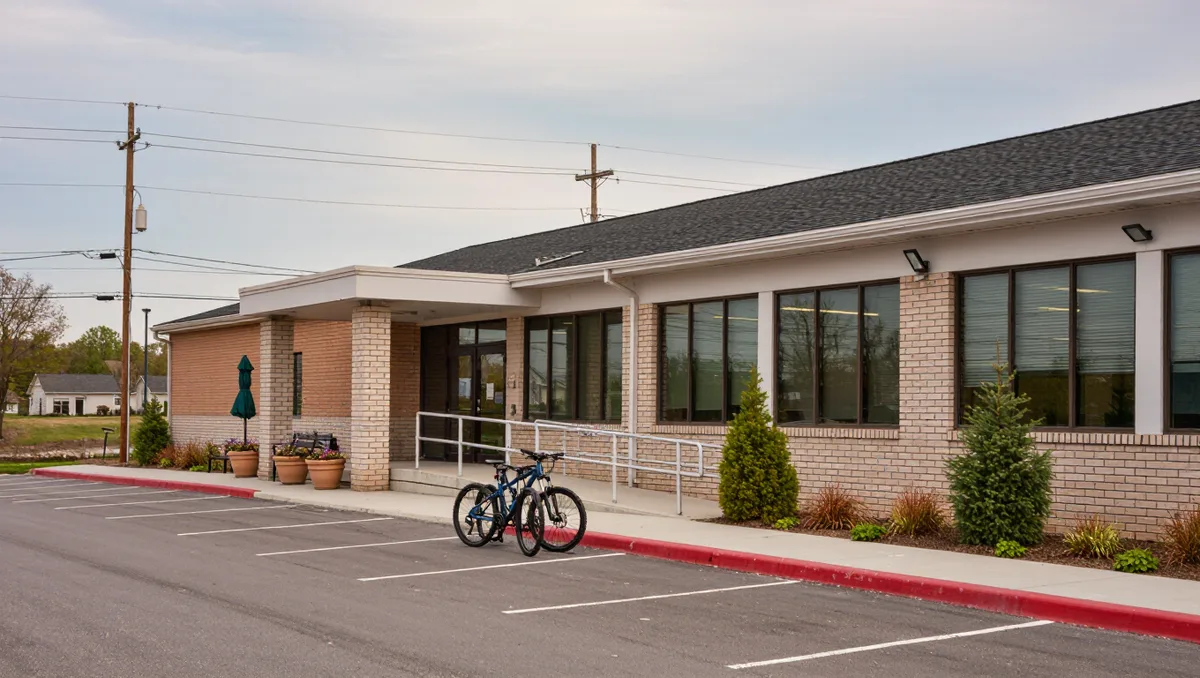
If you are searching for community colleges near me in the Tulsa area, you are mostly looking at one large local option, Tulsa Community College, plus a handful of two-year and regional four-year schools within commuting distance. Admissions at these schools are open or near-open, which means most applicants with a high school diploma or equivalency are admitted. The real differences show up in program offerings, transfer agreements and how you pay.
This guide walks through what admissions actually requires, what costs to expect and how to verify, and how coursework transfers to a state university. It is written for two readers: adults returning to school after years away, and recent high school graduates weighing a two-year start against going straight to a university. For related coverage, see Tulsa Achieves: How Free Community College Works for County Graduates.
Merriam-Webster defines a beginner as "one that begins something," especially an inexperienced person — and that is the right frame here. You do not need a test score, an essay or a legacy connection to start. You need a plan for what you want the credits to do.
What does admissions actually require?
Community colleges practice what is usually called open admissions. In plain terms, if you have a high school diploma, a GED or another recognized equivalency, you can enroll. There is no competitive cutoff. Most schools ask for an application, proof of your diploma or equivalency, and placement information to sort you into the right level of math and English. We covered a connected angle in Tulsa Public Schools Enrollment for 2026-27 Is Open: Dates and Deadlines.
Placement is the step adult learners most often underestimate. Schools may use ACT or SAT scores, prior coursework or their own placement assessments to decide whether you start in college-level classes or in co-requisite or developmental support. If your scores are old or missing, ask the admissions office what options exist. Many schools now use multiple measures rather than a single high-stakes test.
For recent graduates, the process is similar, but timing matters more. Financial aid priority dates and enrollment windows fill from the early side of each term, so applying a semester ahead of when you want to start is the safer path.
How much does it cost, and how do you check?
Tuition at two-year schools is charged per credit hour, and the rate depends on where you live. In-district residents pay the lowest rate. Out-of-district and out-of-state students pay more, sometimes substantially more. Fees for specific courses — labs, materials, online delivery — stack on top of tuition.
Because rates change by academic year and residency rules are specific, do not rely on a friend's old bill or a third-party website. Go to the school's own tuition and fees page and read the rate table for your residency status. That is the number that will appear on your statement.
Three cost levers are worth pulling before you pay anything:
- Financial aid. File the FAFSA early. Grants, work-study and loans all flow through it, and some aid is first-come.
- Scholarships. The school's foundation and local Tulsa organizations award aid that often goes unclaimed. Ask the financial aid office what is on the shelf.
- County programs. Tulsa County graduates may qualify for Tulsa Achieves, a program that covers tuition and fees for eligible county residents. Our separate guide on Tulsa Achieves: How Free Community College Works for County Graduates explains the eligibility rules and how the funding works.
One caution: an advertised free-tuition program usually has residency, enrollment-load and renewal requirements. Read those before you build a budget around it.
What can you study?
Tulsa-area two-year schools split their catalogs into two broad tracks, and knowing which one you are on changes every decision you make.
The transfer track is built around an associate degree designed to move. Oklahoma's system includes a set of general education core courses that state universities have agreed to accept, so a student who completes the core and an approved associate degree can typically enter a four-year school with junior standing. The exact courses that count are listed in the school's transfer agreements and course equivalency tables — those documents, not word of mouth, are the rulebook.
The career track leads directly to work. Health programs, aviation maintenance, manufacturing technology, information technology and skilled trades fall here. These programs train for licenses and certifications, and many are built with local employers around specific hiring needs. Credits in a career program often transfer poorly, because they were never designed to.
Our analysis: the most common expensive mistake is enrolling in career-track courses while intending to transfer. Decide the destination first, then pick the track.
How do transfer pathways actually work?
The cleanest transfer route is a designed one. Oklahoma's public universities and community colleges maintain articulation agreements — written maps that say which courses at the two-year school satisfy which requirements at the four-year school. Follow the map, and your credits arrive with you. Wander off it, and you may find a course counts as elective credit only.
Practical steps that protect your credits:
- Pick your intended transfer university before your second semester, even if it is a tentative choice.
- Ask the community college advisor to build your schedule against that university's degree plan.
- Check the equivalency table every time a course is not clearly on the map.
- Keep syllabi. If a course is ever challenged, the syllabus is your evidence.
Adult learners returning after a break should also ask about credit for prior learning. Some schools award credit for military service, professional certifications or workplace experience that matches a course. It costs a fraction of tuition and can shorten a degree by a semester or more.
What should an adult learner do differently?
Adults bring advantages a nineteen-year-old does not have — clear goals, work discipline and often some college credit from years past. They also bring constraints: jobs, kids, mortgages. A few adjustments make the difference between finishing and stalling.
Start with a transcript audit. If you attended college before, even decades ago, those credits may still apply. Request transcripts from every prior school and have them evaluated before you register for anything.
Then be honest about load. A full-time load is typically twelve or more credit hours per term, but many adult learners do better starting with one or two courses while they rebuild the study habit. Summer and intersession terms, evening sections and online options exist at most schools precisely for this. Ask specifically what a working student's schedule looks like in your program — the answer varies more than most people expect.
Finally, use the advising office early and often. Advising is free, and at open-admissions schools it is the main quality-control mechanism between you and a wasted semester.
Where to go from here
The evidence for choosing a two-year start is straightforward: lower per-credit costs, open admissions and a defined transfer core make it a low-risk way to move toward a degree or a license. What remains unknown for any individual is the fit — which program, which schedule and which funding stack works for your life. Those answers come from the schools' own current pages and from a conversation with an advisor, not from a ranking.
Community colleges are also part of a wider civic picture, from workforce programs to campus events that are open to the neighborhood. For more coverage of local institutions and how they work, see our community section.
Sources: merriam-webster.com · dictionary.cambridge.org · vocabulary.com · dictionary.com