Williams Companies, headquartered on Second Street in downtown Tulsa, moves roughly a third of the natural gas consumed in the United States through its pipeline systems — led by Transco, the 10,000-mile artery running from Texas to New York. That position made Williams a steady dividend stock for a decade. In 2025 it made the company the market's cleanest bet on the demand wave now hitting American gas: artificial intelligence data centers, liquefied natural gas exports and power generation growth arriving all at once.
For Tulsa, the logic matters beyond the stock ticker. Williams is one of the metro's anchor corporate employers, its midstream engineering and commercial staffs draw talent into downtown offices, and its capital decisions ripple through Oklahoma's gas-producing Anadarko Basin suppliers. As 2026 opens, here is where the company's thesis stands.
Why is natural gas demand suddenly a growth story?
For most of the 2010s, U.S. gas demand grew slowly and pipeline companies competed for volume. That picture inverted as three demand sources compounded. Data centers powering AI computing require electricity that, across much of the country, is cheapest and most reliable when generated with natural gas — and utilities are responding with new gas turbines and, often, new pipeline capacity to feed them. LNG export terminals on the Gulf Coast pull gas south in growing volumes. And electrification broadly raises the baseline load that gas generation balances.
The U.S. Energy Information Administration has documented the demand shift in its natural gas outlooks, with electricity-sector gas consumption rising alongside record export volumes. Williams sits downstream of all of it: Transco alone serves the Southeast seaboard, where data center construction has concentrated hardest.
What is Williams actually building?
The centerpiece is Transco expansion. The Southeast Supply Enhancement project — the largest in Transco's history — adds about 1.6 billion cubic feet per day of capacity to serve the Southeast by late 2027, per Williams' project announcements, and it is only the largest entry on a slate of expansion loops, compressor additions and lateral connections. The company's commercial model is the point: expansion projects are underwritten by long-term, take-or-pay style contracts with utilities and shippers before steel goes in the ground, which converts demand growth into contracted, predictable cash flow rather than speculative volume.
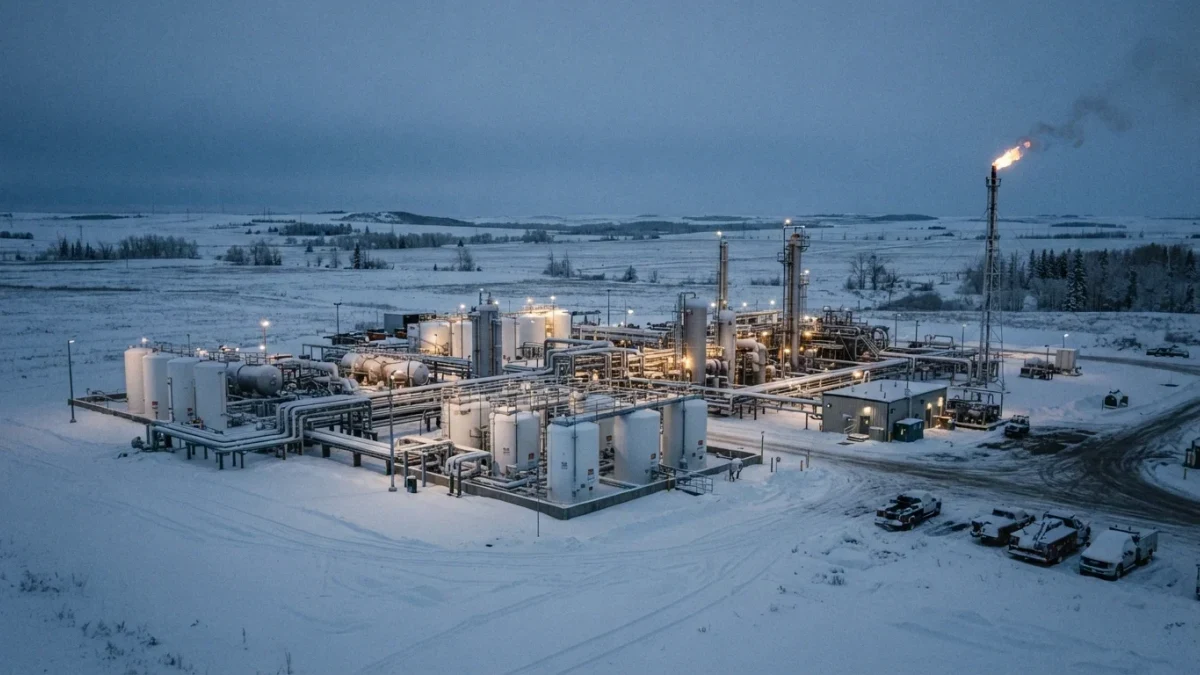
Beyond Transco, Williams' footprint spans the gathering and processing systems of the Marcellus Shale in Appalachia, the Anadarko Basin in Oklahoma, and Gulf Coast connections feeding LNG corridors. The strategy that has emerged through 2025 is connecting supply basins to demand centers as a system — the company describes its proposition as the energy highway — and the data center opportunity fits it directly, from gas-fired power supply contracts to behind-the-meter arrangements.
What does this mean for Tulsa?
Williams' headquarters effect is understated but structural. The company is a component of the S&P 500, pays a dividend that anchors many Oklahoma retirement portfolios, and its downtown campus concentrates high-paying engineering, trading and commercial roles that would otherwise disperse to Houston. Local professional services — accounting, law, construction management — orbit the headquarters payroll.
The Oklahoma operating footprint runs through the Anadarko Basin, where Williams' gathering systems collect production from the state's western counties. When basin drilling responds to national demand, the volumes move on Williams pipes — a linkage that has made the company's project announcements a leading indicator for Oklahoma oilfield service activity, even as drilling itself migrates with commodity prices.
How the dividend and the balance sheet fit
Williams' investment case has always run through its distribution. The company cut its dividend during the 2018-2020 downturn, rebuilt it, and then held the payout roughly flat for years while directing cash flow toward debt reduction and high-return projects — a sequence that frustrated income investors but left the balance sheet positioned for exactly this cycle. With the 2025 guidance framework, management paired the dividend with a rising buyback and growth capital, a combination that signals confidence the contracted backlog can fund all three at once.
The capital discipline matters for Tulsa specifically, because headquarters functions scale with capital deployed: more expansion projects mean more commercial negotiators, more regulatory staff, more construction management — roles that sit downtown rather than in the field. A company spending at the top of its historical range is a company hiring.
How does Oklahoma gas fit the picture?
The Anadarko Basin gives Oklahoma a direct stake in the national story. The state's western counties produce from stacked horizons that respond to gas prices with a lag, and midstream capacity — how much gas the basin can move to market, and at what cost — sets the effective price producers receive. Williams' Oklahoma gathering systems are part of that equation, and the broader midstream buildout in the state, including the pipelines other operators have laid toward Gulf Coast demand, has narrowed the discount that long isolated Oklahoma gas from coastal pricing. When national demand tightens, basin producers capture more of it only if takeaway capacity exists; that infrastructure bet, made quietly over the past several years, is what links a data center in Virginia to a drilling rig in Grady County.
What are the risks to the story?
Three are worth naming. Execution risk: multi-billion-dollar expansions must reach service on schedule, and late projects delay the contracted cash flows the thesis depends on. Regulatory risk: interstate pipelines permit through the Federal Energy Regulatory Commission, and new capacity — especially into congested eastern markets — draws legal challenges that stretch timelines even when approvals hold. And demand-forecast risk: if AI-driven power demand disappoints, or if renewables plus batteries displace more gas generation than utilities currently project, the expansion backlog would thin. Through late 2025, the contracted nature of Williams' backlog was the market's main reassurance on all three.
What to watch next: the company's fourth-quarter 2025 results, due in February, will show whether the project backlog keeps growing and how management sizes the 2026 capital program. For Tulsa, the quieter indicator is hiring — headquarters job postings in commercial development and engineering are the local tell for how hard the company is leaning into the demand wave it now fronts.