ONEOK, headquartered in downtown Tulsa, runs one of the nation's largest natural gas liquids systems — roughly 25,000 miles of pipeline after the acquisitions that reshaped the company over the past three years, including the $18.8 billion purchase of Magellan Midstream completed in September 2023. While Williams moved Tulsa's midstream crown into interstate natural gas, ONEOK built a parallel empire on the less-famous layer of the energy business: the propane, ethane, butane and natural gasoline that come out of raw gas and end up in furnaces, plastics plants and gasoline blends.
Understanding what ONEOK does explains a surprising share of everyday economics — winter heating costs, plastic feedstock prices and the value of a western Oklahoma gas well all route through NGL logistics.
What are natural gas liquids, and why do they matter?
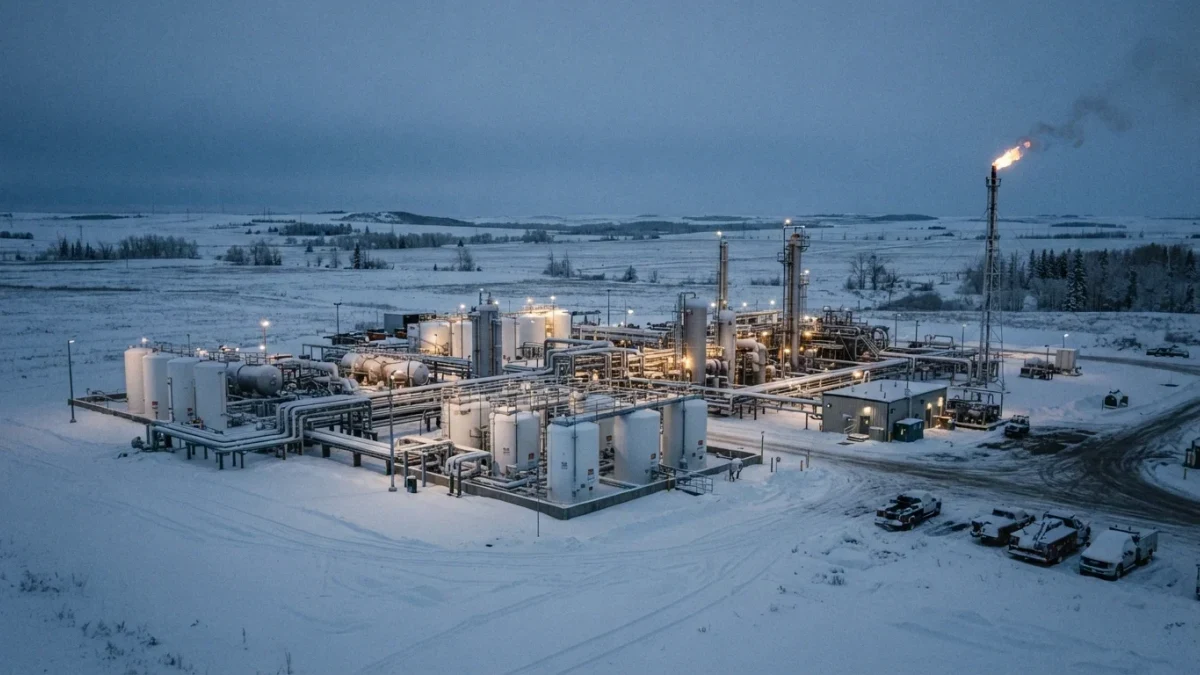
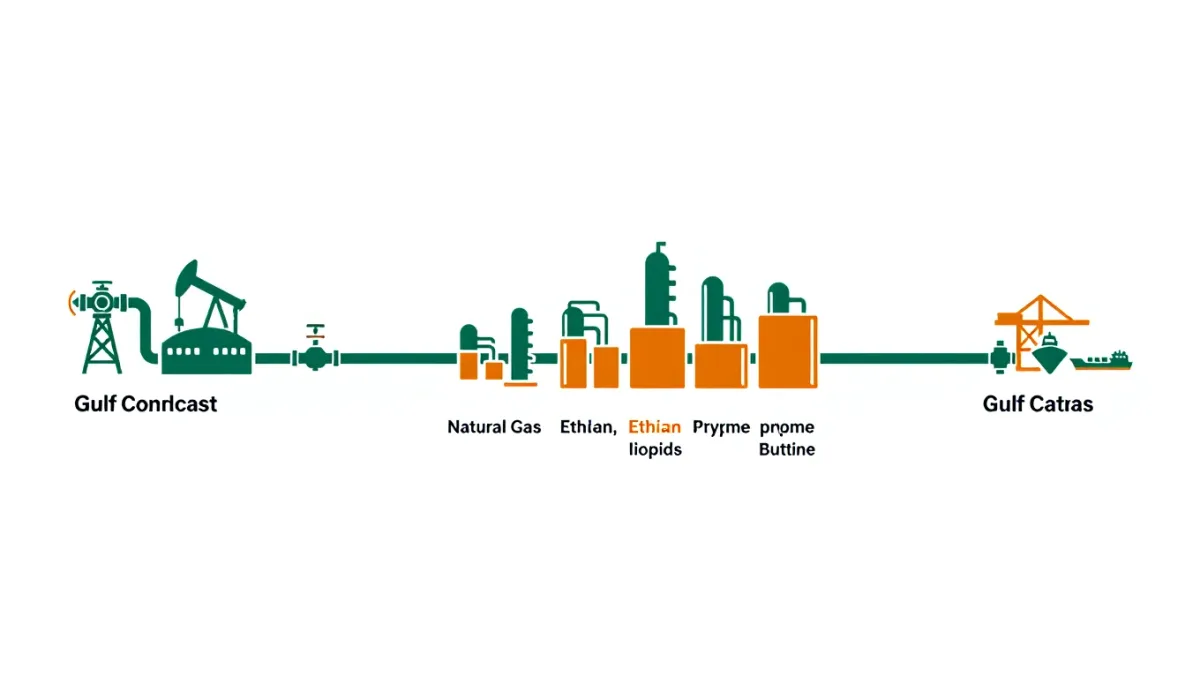
Raw natural gas from wells like those in Oklahoma's Anadarko Basin is not pure methane. It carries a family of heavier hydrocarbons — ethane, propane, butane and natural gasoline — that get stripped out at processing plants and sold separately. Those NGLs are the feedstock layer of the economy: ethane feeds petrochemical crackers that make plastics, propane heats rural homes and dries grain, butane blends into gasoline, and natural gasoline blends or flows to refineries.
ONEOK's business is moving, separating and storing that stream. Its systems gather raw gas in the Rocky Mountains, the Mid-Continent and the Permian Basin, run NGL pipelines to Mont Belvieu near the Gulf Coast — the pricing hub where the industry's fractionators split the mixed stream into purity products — and increasingly connect to export docks where propane ships overseas. The fee-based model means ONEOK earns on volume and throughput rather than on commodity prices, which is what makes the earnings stable enough to support the dividend that anchors Tulsa investment portfolios.
What did the Magellan acquisition change?
The Magellan deal, closed in September 2023, brought ONEOK a refined-products and crude network of more than 10,000 miles — gasoline, diesel and jet fuel pipelines running from the Gulf Coast through the Midwest — plus terminal assets in dozens of cities. Strategically, the fit is about optionality: refined-product pipelines generate steady tariff income, connect to the same markets ONEOK's NGLs serve, and create a network that the combined company can extend, most visibly with projects converting and connecting capacity toward Mexico and toward petrochemical corridors.
The company followed through 2024 by folding in EnLink Midstream assets and the Medallion crude gathering system, extending its footprint in Texas and Louisiana. The cumulative effect: a Tulsa-headquartered company with a nationwide midstream footprint and a claim to being the most NGL-weighted large midstream operator in the country — a concentrated bet on the plastics-and-propane layer of American energy.
What does ONEOK mean to Tulsa?
Tulsa hosts two of America's top-tier midstream companies, and ONEOK's headquarters carries the same structural weight as Williams': commercial, accounting, legal and trading functions concentrated downtown, with the payroll that follows. The Magellan integration added legacy-Tulsa assets to the portfolio — Magellan was itself headquartered in Tulsa — so the acquisition effectively consolidated that company's local presence under ONEOK rather than relocating it.
The dividend is the other civic connection. Both Tulsa midstream giants pay large distributions, and Oklahoma retirement accounts, endowments and family portfolios hold them as income anchors. ONEOK's earnings reports, delivered quarterly, move local wealth in a way few other companies' results do.
How propane weather becomes a Tulsa earnings line
One quirk of the NGL business shows up every winter: propane is a heating fuel, and ONEOK's systems feed the distribution network across the Midwest and Rockies. A cold January pulls volumes through the chain and lifts earnings; a warm one does the opposite — which is why the company's quarterly calls spend real time on weather-normalization and storage levels, and why a Tulsa reader tracking natural gas inventory reports has a head start on understanding ONEOK's next quarterly print. The same logic runs in reverse through exports: when overseas propane prices outperform U.S. prices, Gulf Coast export terminals run hard, and the pull extends back through the pipelines to the wellhead.
Volume sensitivity cuts both ways in Oklahoma terms. The Anadarko Basin processing plants that strip NGLs from raw gas run on producer activity, so rig counts in western Oklahoma feed the system's western segment, while Gulf Coast demand feeds the southern one. ONEOK's geographic spread exists precisely so that a soft region or season does not hollow out the year — and the 2024-2025 expansion into Texas deepened that hedge.
What could go wrong for the NGL thesis?
The model's fee-based core insulates ONEOK from prices, but not from volumes. NGL demand ties to petrochemical construction cycles, export competitiveness and propane weather demand; a prolonged petrochemical downturn or a warm winter shows up as thinner throughput. Integration risk is real as well — the company is digesting three acquisitions at once, and debt taken on for Magellan put leverage near the top of the comfortable range, making free-cash-flow discipline the metric to watch. And the export corridor binds ONEOK to global markets: when Gulf Coast propane is competitively priced, utilization runs high; when international oversupply hits, margins across the chain compress.
What to watch next: the company's fourth-quarter 2025 earnings, due in late February, and with them the 2026 capital guidance — the number that tells investors whether integration is far enough along to fund new growth projects alongside debt paydown. Locally, watch the headquarters hiring line: integration work is white-collar work, and much of it sits in Tulsa.