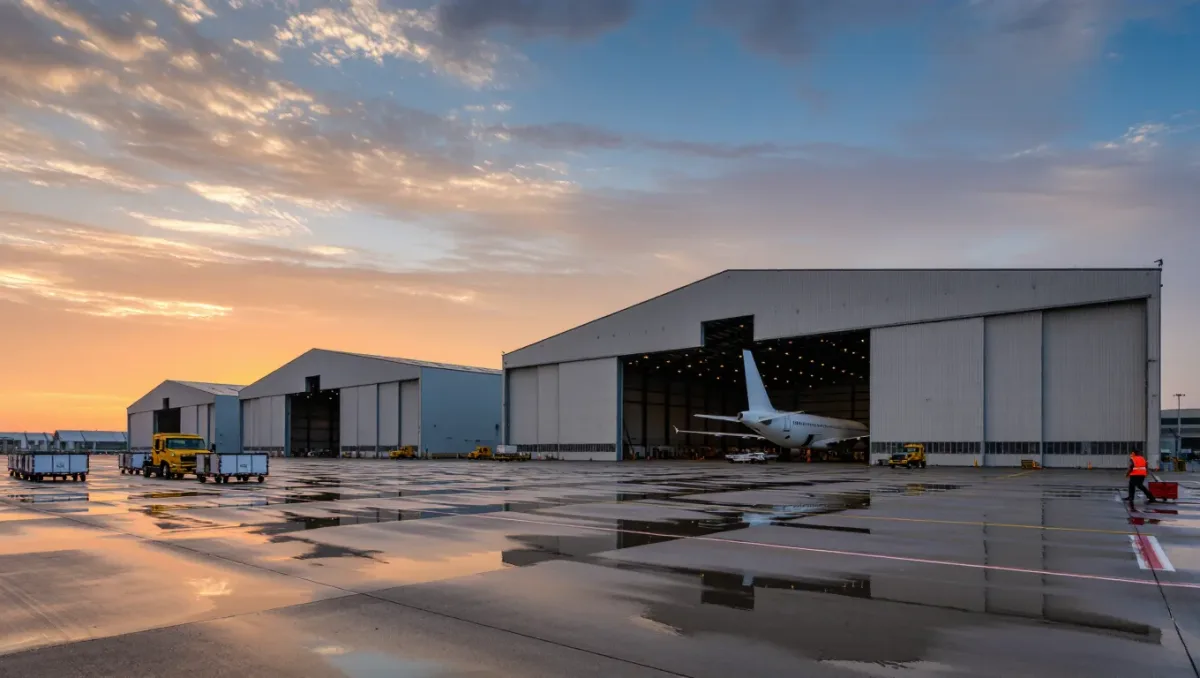
American Airlines' maintenance base at Tulsa International Airport opened in 1946, which makes 2026 the base's 80th year — and the oldest claim in American's system is still its busiest. Tulsa is the airline's largest maintenance and engineering center by scope of work, a facility where roughly 5,000 employees overhaul airframes, repair engines and components, and fabricate parts that keep a mainline fleet flying. A $550 million expansion, announced by the airline and state officials, is adding hangar capacity and modernized shops; a hiring push launched in September 2024 targeted more than 300 new Tulsa jobs as part of a broader 500-mechanic national add.
For a metro that measures its economy in aviation, the base is both the anchor tenant and the training pipeline. Here is how the operation works and why Tulsa keeps winning the work.
What actually happens at the Tulsa base?
Tulsa performs heavy airframe maintenance — the scheduled overhauls, sometimes called heavy checks, where an aircraft enters a hangar for days or weeks while inspectors open panels, test systems and repair structure. Beyond the hangars, the base runs an industrial park of shops that most travelers never see: engine overhaul and test cells, landing gear overhauls, avionics repair, upholstery and interiors, tire and wheel shops, plating and a full machine shop capable of fabricating parts from raw metal. American's Tulsa operation is one of the few places in the country where an airline performs that breadth of work in-house rather than outsourcing to third-party repair stations.
The economics follow the fleet. Airframe cycles are scheduled years ahead, which makes the base's workload countercyclical to ticket sales — airlines park or retire aircraft in downturns, but the maintenance calendar of the surviving fleet continues, and Tulsa's shops also generate third-party revenue servicing other operators' aircraft and components.
Why is Tulsa the base?
History and geography made the match. American Airlines' predecessor operations established maintenance in Tulsa during World War II, and the 1946 formalization stuck because the site works: open Oklahoma skies for test flights, a central location for fleet logistics, rail and highway access for heavy parts, and — decisive across decades — a labor pool that the base itself trained. Five generations of Tulsa machinists and mechanics have passed through the plant, many into second and third careers at the region's other aerospace employers.
That clustering built the metro's wider industry. Spirit AeroSystems' Tulsa operations, Boeing's presence, L3Harris, NORDAM and dozens of suppliers all draw on the same aviation manufacturing and maintenance workforce, and the base's alumni network staffs the region's shops and schools. Aerospace is routinely measured as Tulsa's largest employment cluster, and the American base is its original node.
What does the expansion include?
The $550 million commitment covers hangar construction and base support expansion on the order of 140,000 square feet, per the announcement facilitated through state economic development channels, alongside ongoing modernization of shops that date to mid-century buildings. The hiring adds mechanic capacity as the fleet grows and as an aging national workforce retires — American, like every major carrier, faces a documented shortage of licensed airframe and powerplant technicians industry-wide, which is why the airline's Tulsa jobs announcements carry sign-on incentives unusual for hourly aviation work.
The pipeline side is the quieter investment. American partners with Tulsa Tech on aviation maintenance technician training, and the region's schools — from Tulsa Tech's programs to Tulsa Community College's aviation sciences — feed the base's openings. A student who starts an A&P certification at 19 can be on the Tulsa hangar floor at 21 on a wage scale that reaches six figures with seniority and licenses.
What a mechanic career pays, and where it goes
The wage structure explains why the pipeline matters. Licensed mechanics start on a scale that climbs with each step and license, reach six figures with seniority, and carry their certification across the industry — which makes the A&P license one of the most portable credentials in Tulsa's economy. The base's internal ladder runs wide: lead mechanics, inspectors, planners, supervisors and the engineering staff who write the repair procedures hangar crews follow. Veterans transition into the trade through military skills bridging programs, and the shops' specialist trades — machining, plating, avionics — recruit from trade school graduates who never touch an airplane elsewhere in Oklahoma.
The base also anchors an ecosystem of supports that make hourly aviation work viable in Tulsa: shift differentials, union representation through the Transport Workers union, and a seniority-based job security structure that keeps payroll in the metro through slow quarters. When the base adds 300 jobs, suppliers, cafeterias, tooling vendors and the airport's own employment feel the same lift.
What is the risk profile?
Tulsa's aviation workers have lived through the downside: the post-9/11 airline collapse and the pandemic's furlough waves both hit the base hard, and older residents remember the 1990s restructuring debates that once threatened the plant's future. The current cycle runs the other direction — airlines are maintenance-rich after fleet growth, mechanic shortages are structural, and American has publicly recommitted rather than consolidated — but the base's fate is tied to one carrier's balance sheet, a concentration no other Tulsa employer matches at scale.
What to watch next: hangar construction milestones through 2026 and 2027, the pace of the mechanic hiring classes, and the airline's next fleet orders, which determine what work Tulsa's shops perform a decade out. For job seekers, the actionable number is the Tulsa Tech and community college aviation enrollment windows — the base hires from them first, and the 80th year looks like a hiring year, not a holding one.