Tulsa's winter event calendar includes one of the sport's most reliable draws: Professional Bull Riders competition at the BOK Center, the city-owned arena that has hosted the tour on and off since it opened downtown in 2008. A qualified ride lasts 8 seconds and is scored on a scale to 100 points, and that single mechanic explains almost everything about how the event is built, from the number of riders in a draw to how the prize money gets paid out.
For newcomers, the format can look chaotic — chutes, klaxon horns, and bullfighters in bright jerseys — but the structure is strict, and understanding it makes the two-plus-hour show considerably easier to follow.
How is a bull ride scored?
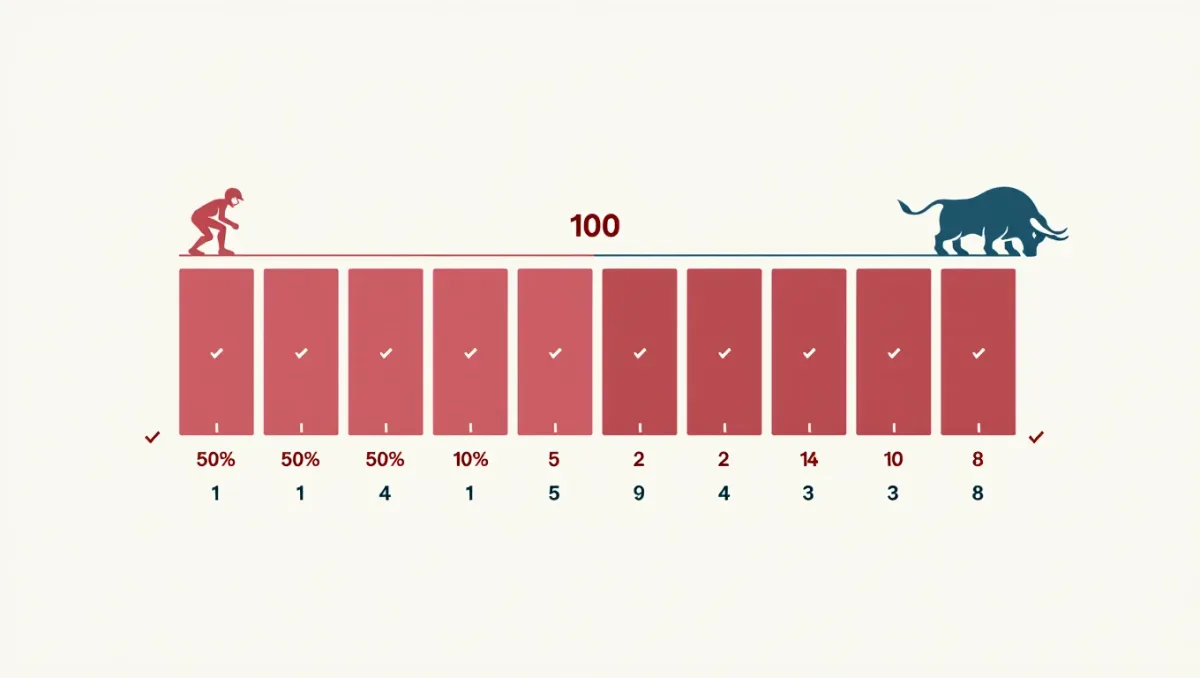
Each qualified ride is judged on a 100-point scale, split evenly between rider and bull. Four judges work the event: the rider is graded on control, style, and spur motion, while the bull is graded on how hard he is to ride — kick, spin, and drop. The rider and the animal each can earn up to 50 points, and the two halves are added together for the ride's total.
The bull's score matters because he is an athlete with his own season statistics. Top bulls on the tour have names, breeding lines, and career earnings, and the stock contractor who raises them is paid a fee every time one is selected for a round. A ride only counts if the rider stays on for the full 8 seconds with one hand in the rope; touching the animal or oneself with the free hand ends the ride with no score.
What does the event format look like?
A standard tour stop runs over two to three performances. Riders are drawn against bulls in a preliminary round, and the field is then cut for a championship round at the end of the final performance. Event standings are calculated on total ride scores across rounds, and the event winner takes the largest share of the event purse, with money paid down through the standings.
Points on the world standings ladder are the bigger prize. Across a season, riders accumulate world standings points at each stop, and the season ends with a championship event that decides the world title — the sport's equivalent of a playoff, with a multi-million-dollar bonus attached.
Why does Tulsa keep landing tour stops?
The BOK Center checks the boxes the tour needs. Opened in 2008, the city-owned arena seats roughly 19,000 for center-stage concerts, per the City of Tulsa, and its floor plan handles the dirt floor, chutes, and bucking chutes that a bull riding event requires. Tulsa also sits in the middle of the sport's fan geography: western Oklahoma, Kansas, Arkansas, and north Texas all fall within a few hours' drive, which is why winter tour stops in Tulsa historically fill the lower bowl without heavy discounting.
The city's rodeo audience extends beyond the arena. Stock contractors, bull breeders, and youth rodeo programs across Green Country feed the pipeline that makes a Tulsa date commercially reliable for the tour.
What should first-time attendees know?
Three practical notes. Earplugs are worth bringing — the in-arena sound level during a ride is genuinely loud, between pyro, music, and the crowd. Concessions run local food stands alongside standard arena fare, and doors at the BOK Center typically open about 90 minutes before the first ride. Finally, the best value seats for first-timers are usually the lower-bowl corners: close enough to see the chute work, which is half the show, without paying the floor-seat premium.
Safety mechanics are worth understanding too. The bullfighters in the arena are not clowns; they are trained protection athletes whose job is to draw a bull's attention the moment a rider dismounts. Riders wear protective vests modeled on rodeo armor developed in the 1990s, and helmets are now standard for most of the field, though some veterans still ride bareheaded. Injuries are part of the sport's record, and the tour maintains medical staff on site at every performance, with an ambulance staged inside the tunnel.
Families should also know the show is designed for television pacing. Replays, interviews, and freestyle bullfighting exhibitions fill the gaps between rides, so the event feels continuous even though the riding itself comes in short bursts.
How does the money flow?
Event economics run through three streams: ticket sales, event-level sponsorship, and the tour's media rights, which fund the season-long purse. Stock contractors are paid per bull selected, judges and bullfighters are contracted per event, and riders compete for the event purse plus the world standings points that carry season-level bonuses. The City of Tulsa receives lease revenue from arena events as the building's owner, per the city's agreements with its arena operator.
For the local economy, a winter tour stop functions like a mid-size convention: it books hotel rooms downtown on a weekend that would otherwise run thin between the holidays and the spring festival season.
What to watch next
Watch the world standings heading into the spring stretch — riders jockeying for the championship cut tend to enter winter stops aggressively — and watch for the arena's spring calendar, where the bull riding slot is typically followed by touring concerts and the start of the outdoor festival season. Tulsa's next chance to see the sport at arena scale will be listed on the BOK Center's event calendar, where winter tour stops are typically announced a season ahead alongside the rest of the downtown lineup.