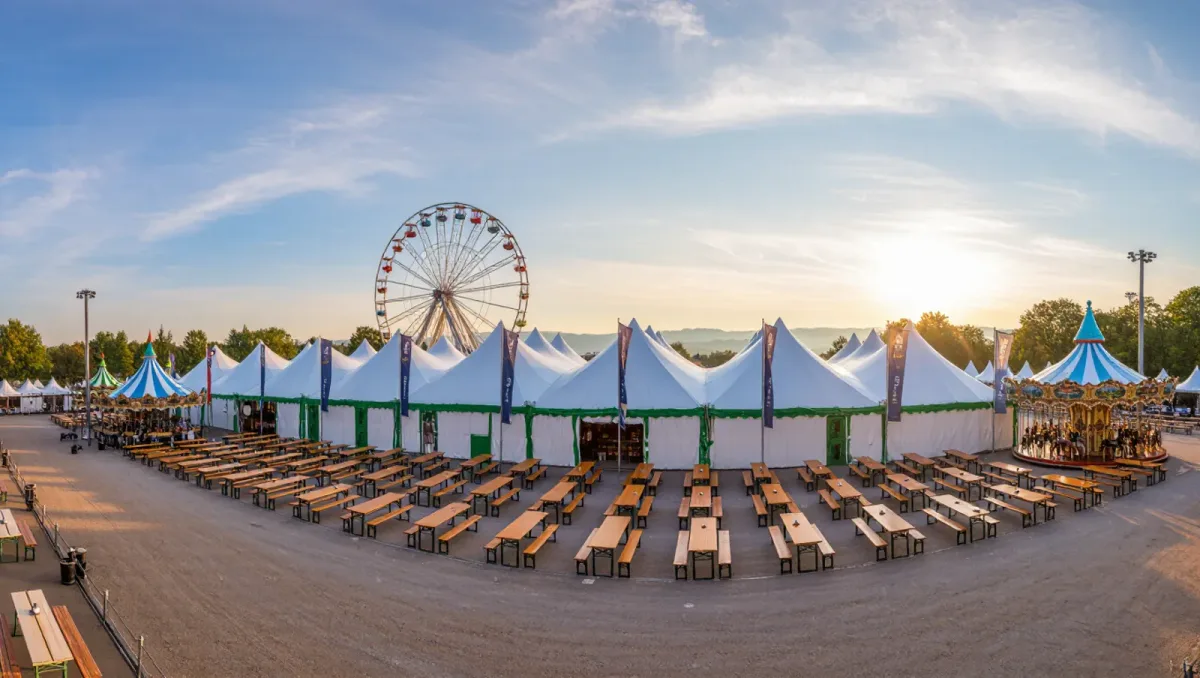
Tulsa Oktoberfest closes the city's outdoor festival season with four days in late October at River West Festival Park, on the west bank of the Arkansas River across from downtown. The event, a Tulsa institution for more than four decades, centers on German food, imported and local beer tents, carnival rides, and music stages, and it draws a regional crowd that makes it one of the river parks' highest-attended weekends of the year, per festival organizers.
For attendees, the festival is straightforward — buy admission, cross the river, eat a pretzel the size of a plate. But the logistics reward planning, because the site's single-bridge geography turns parking and shuttles into the difference between a relaxed evening and a circled-block one.
What is actually at the festival?
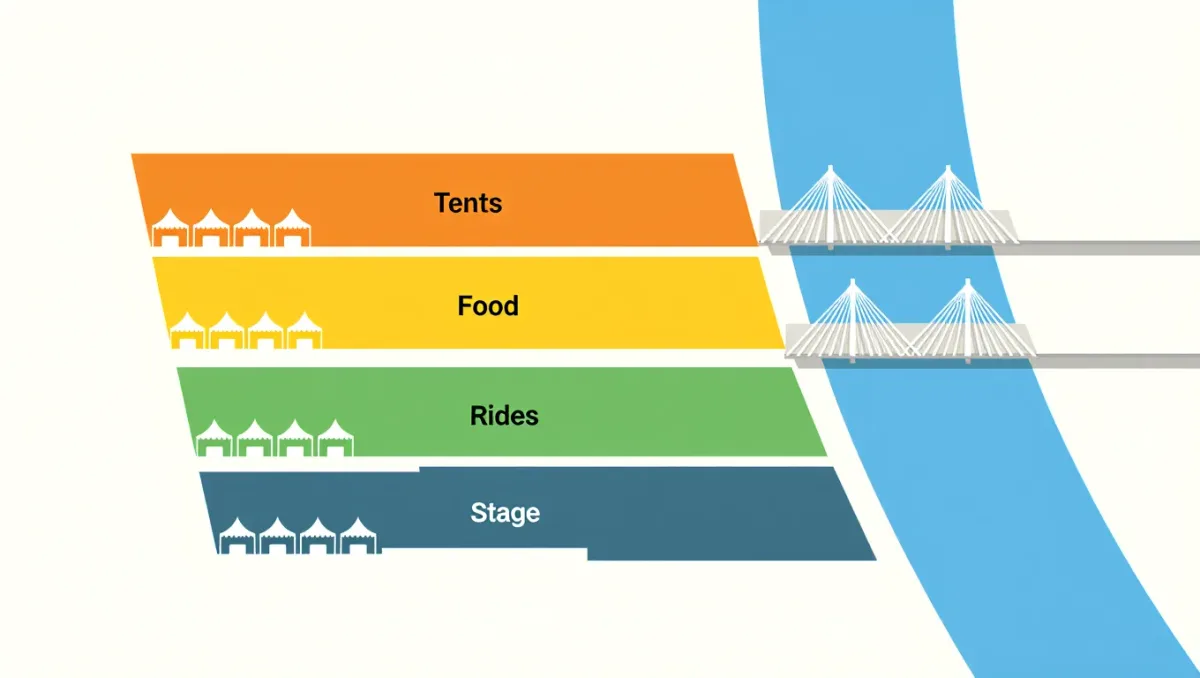
The footprint divides into four working zones. The beer tents are the anchor: long-table halls serving German imports alongside Oklahoma breweries' festbiers, with table service in some sections and standing service in others. The food row runs the German canon — bratwurst, schnitzel, pretzels, strudel — mixed with local food trucks. A carnival section supplies rides and games, aimed squarely at families in the early afternoon hours. And the music stages split programming between traditional German bands, polka acts, and contemporary local headliners that pull the younger evening crowd.
The blend is deliberate. The traditional programming sustains the festival's cultural identity and its older, returning audience; the local-music bookings keep the event relevant to attendees who have no other connection to Oktoberfest's Bavarian framing.
How do tickets and admission work?
Admission is ticketed but modest, with advance online purchase running below the gate price, per the festival's published pricing in recent years. Drink and food purchases run on a ticket or card system inside the gates, and the festival typically bundles admission with drink credits in advance-sales packages. Children's pricing and family-day discounts apply in the afternoon blocks, which is when the carnival rides do their heaviest business.
The economics mirror other Tulsa festivals: admission covers the event's fixed costs, and vendors and tents carry the margin. For a family, the honest budget is admission plus food plus rides — and the food, not the entry fee, is where the spending concentrates.
What is the parking and shuttle plan?
The geography is the constraint. River West Festival Park sits west of the river, and festival traffic funnels through the 11th Street and 23rd Street bridges from downtown, with the 21st Street bridges carrying overflow. The festival has historically run shuttle service from downtown lots, and park-and-ride is the option organizers push hardest, per past festival guidance.
The practical playbook: arrive before the evening rush if driving, because the west-side lots fill by early evening on Friday and Saturday; use the shuttle for peak nights; and expect rideshare surge pricing at close, when thousands exit across two bridges at once. Weather matters too — late October in Tulsa can run from 85-degree afternoons to freeze warnings in the same week, and the tents handle wind and cold far better than rain.
Why does the festival matter to the river parks?
Oktoberfest is one of River West Festival Park's anchor bookings, and events like it justify the west-bank park investment the city has made over two decades of riverfront work. The festival's regional draw — from Oklahoma City, Fayetteville, Wichita, and Joplin — fills hotel rooms on a shoulder-season weekend that would otherwise run thin between fall break and the holidays, per standard tourism patterns.
For the river parks system, the event also demonstrates the west bank's viability as a venue, which shapes planning for the broader Arkansas River development projects the city continues to weigh.
How has the festival changed?
The Oktoberfest template has modernized the way its peers have: more local brewery participation, a broader music mix, cashless payments, and an expanded family window in the afternoons. What has stayed constant is the format's compactness — four days, one park, walkable footprint — which is why the festival has never needed to move from the river site that fits it exactly.
What should first-timers know about the tents?
The beer tents run on their own etiquette. Seating inside the long-table halls is first-come in most sections, tables turn over between music sets, and the peak evenings are standing-room — which is part of the draw, not a failure of planning. Server-patronized sections exist for groups who want reserved tables, and those bookings sell out well before the festival opens, per past festival practice.
Food strategy matters more than most visitors expect. The German canon is represented in full, but the shortest lines all weekend belong to the local trucks, and the smart move is eating early — before 6:30 p.m. — or late, after the evening headliner starts. The pretzel alone justifies the admission price for many regulars, and portions across the food row are generous enough to share.
Dress for the season, not the calendar: October evenings on the river run cold once the sun drops behind the west bank, and the tents hold heat well but the lines between them do not. Layers, closed shoes for gravel and grass, and a pocket plan for tickets and cards beat anything else in the checklist.
Finally, pace the weekend honestly. The festival rewards a single long afternoon far more than it rewards two exhausted evenings, and the Sunday close is the local’s session — lighter crowds, full menu, and the last chance at the rides before teardown begins.
What to watch next
Watch for the festival's dates and advance ticket window announcements as fall approaches, the music lineup reveal in early fall, and the shuttle plan published with the event map. The rule that holds every year: the Saturday evening session is the event at full volume, and everything easier — parking, lines, tables — is available to anyone willing to trade it for a Friday afternoon or a Sunday.