The Fourth of July in Tulsa looks like a familiar American holiday: backyard cookouts, a parade down a main street, fireworks over the river. But the customs behind it are older than the city by more than a century. They trace to commemorations that began in 1777, when Philadelphians marked the first anniversary of independence with bonfires, bells and fireworks, and they grew as the country grew.
Understanding how those traditions formed — and how the events leading to the American Revolution shaped what people celebrate — helps explain why Tulsa's holiday looks the way it does. The city itself came much later. According to Wikipedia, Tulsa was settled between 1828 and 1836 by the Lochapoka band of Creek Native Americans and formally incorporated in 1898, so the town inherited national customs that were already well worn.
What are the events leading to the American Revolution that the Fourth commemorates?
The holiday marks July 4, 1776, the day the Second Continental Congress adopted the Declaration of Independence. That document was the endpoint of a decade of disputes between the colonies and Britain: new taxes, protests against them, and a growing argument that the colonies should govern themselves. The events leading to the American Revolution are usually summarized as that chain — taxes, protest, resistance, then the declaration itself.
Early celebrations made the connection explicit. Towns held public readings of the Declaration, fired salutes and rang bells. Those readings mattered because most people in 1776 had never seen the text. Hearing it read aloud in a town square was how the news arrived, and the practice stuck as a patriotic custom long after the war ended.
Other customs carry the same history. Fireworks came from the first anniversary celebrations in Philadelphia and Boston. Parades grew out of militia musters and civic processions of the early republic. The red, white and blue became the visual shorthand for the flag adopted by the new government. None of these started in Oklahoma, but all of them traveled west with settlers.
How did those national customs reach Oklahoma?
Oklahoma entered the Union decades after the holiday was established, so the Fourth here was never a founding story. It arrived as a borrowed ritual. Settlers brought the cookout, the parade and the fireworks show with them, and the holiday took root in towns that had no direct tie to the Revolution itself.
That layering is worth naming plainly. Tulsa sits on land with a much longer history than the holiday's. Much of the city lies within the Muscogee (Creek) Nation, with parts in the Cherokee and Osage Nations, and the settlement at the Creek Council Oak Tree predates incorporation by decades. A modern Tulsa Fourth is a national holiday layered onto that older landscape, not a replacement for it.
What does a Tulsa Fourth of July actually look like?
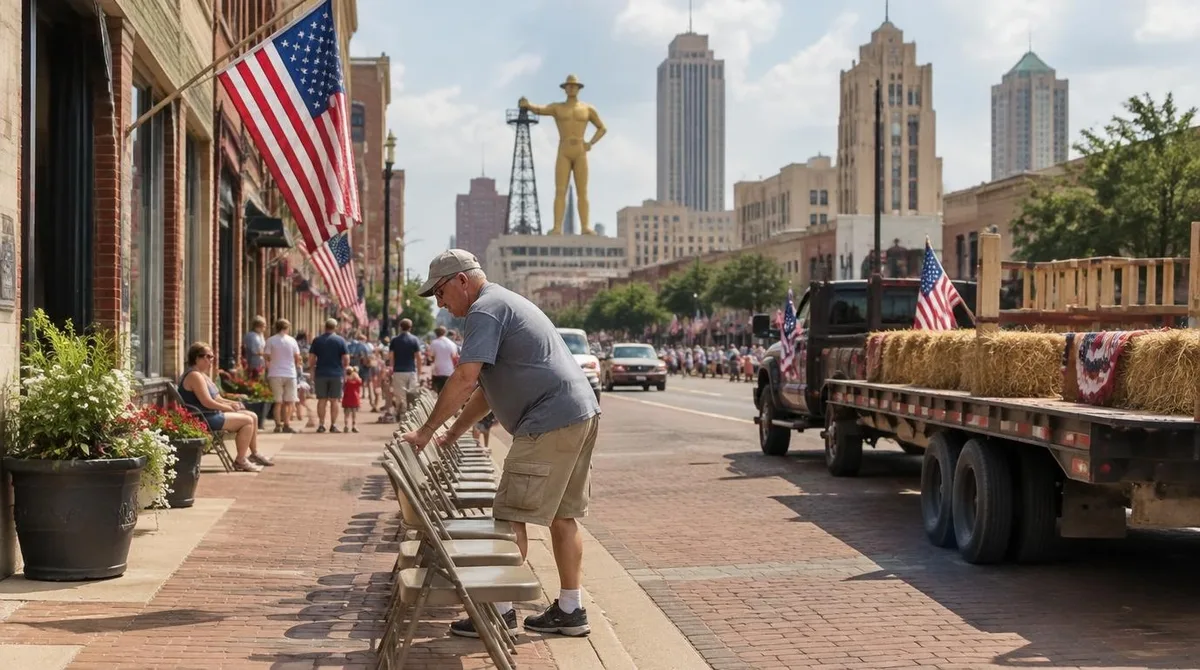
The shape of the day is consistent across neighborhoods. Morning belongs to community celebrations: neighborhood gatherings, church and civic cookouts, and small-town parades in the surrounding communities. Afternoon is family time. Evening belongs to fireworks, whether at a large public show or a backyard display where local rules allow one.
What Tulsans can expect on any given year comes down to what local organizers and venues list. According to Visit Tulsa, the city's events calendar is built from recurring listings — weekly gatherings, monthly crawls and seasonal festivals — which is the same structure that carries Fourth of July listings each summer. Checking that calendar, and each event's own page, is the reliable way to confirm times, locations and whether admission is charged.
One practical note: details move. A show's start time, a park's capacity rules and a fireworks schedule can change year to year. The date itself is fixed. Everything around it is local, and locals set it.
Why do the old customs still hold?
The Fourth survives because its customs are cheap to stage and easy to share. A parade needs a street. A cookout needs a yard. Fireworks need an open sky. That simplicity let the holiday travel from Philadelphia's first anniversary to an Oklahoma city that would not exist for another century.
There is also a civic layer. Public readings of the Declaration faded, but the habit of gathering in public on the Fourth did not. A parade route or a fireworks crowd is one of the few remaining moments when a whole city shares the same event at the same time. Tulsa's other big gatherings — a festival on the river, a fair on the fairgrounds — work the same way, which is why they fill the rest of the local events calendar. This connects to our earlier piece, Tulsa Events Calendar — Tulsa's Seasonal Event Calendar: Planning Your Year of Festivals and Shows.
What this means for planning your own Fourth
For residents, the useful takeaway is simple. The holiday's meaning is national; its logistics are local. Plan around three questions: where the public celebrations are, what your neighborhood does on its own, and what the rules are for fireworks where you live.
- Check the city's official listings and each organizer's page for times, locations and admission before the holiday week.
- Expect the biggest public shows to draw crowds, so arriving early is the practical norm at large displays.
- Look for neighborhood-level events too. Some of the best Fourth gatherings in Tulsa are the small ones: a block cookout, a church picnic, a subdivision parade.
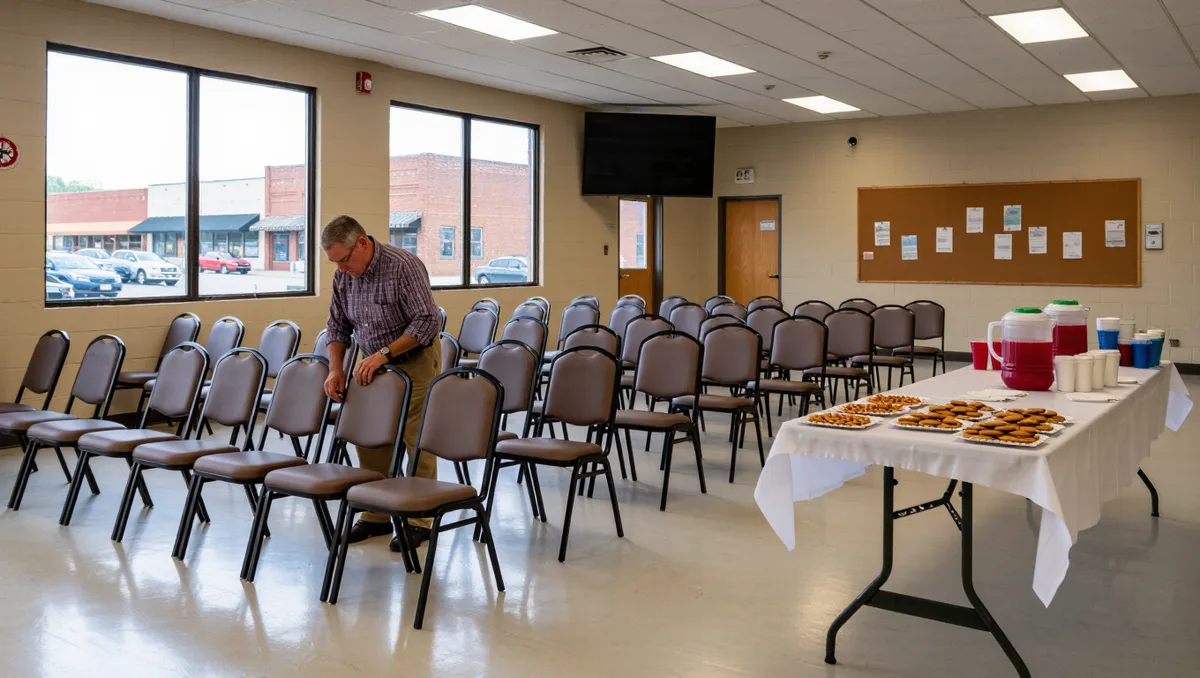
- If you are hosting, the same seasonal preparation that applies to any large gathering applies here — plan food, shade and seating ahead of the rush.
For families weighing the holiday against the rest of the summer calendar, our guide to How to Find Family-Friendly Events in Tulsa Any Week covers the same search habits for the other eleven months. And for the broader season, the Tulsa Festival Calendar 2026 shows where the Fourth sits among the city's other big dates.
The takeaway
Tulsa's Fourth of July is a inherited tradition, not a local invention. The customs — fireworks, parades, public gatherings — began as commemorations of the Declaration of Independence and the events leading to the American Revolution, then traveled west and settled into neighborhoods that had no part in the founding. What Tulsa adds is its own setting: a city on the Arkansas River, in Green Country, celebrating a national day in neighborhood-sized pieces. The evidence for the holiday's origins is historical record; the evidence for how Tulsa marks it is the local calendar, checked each year.