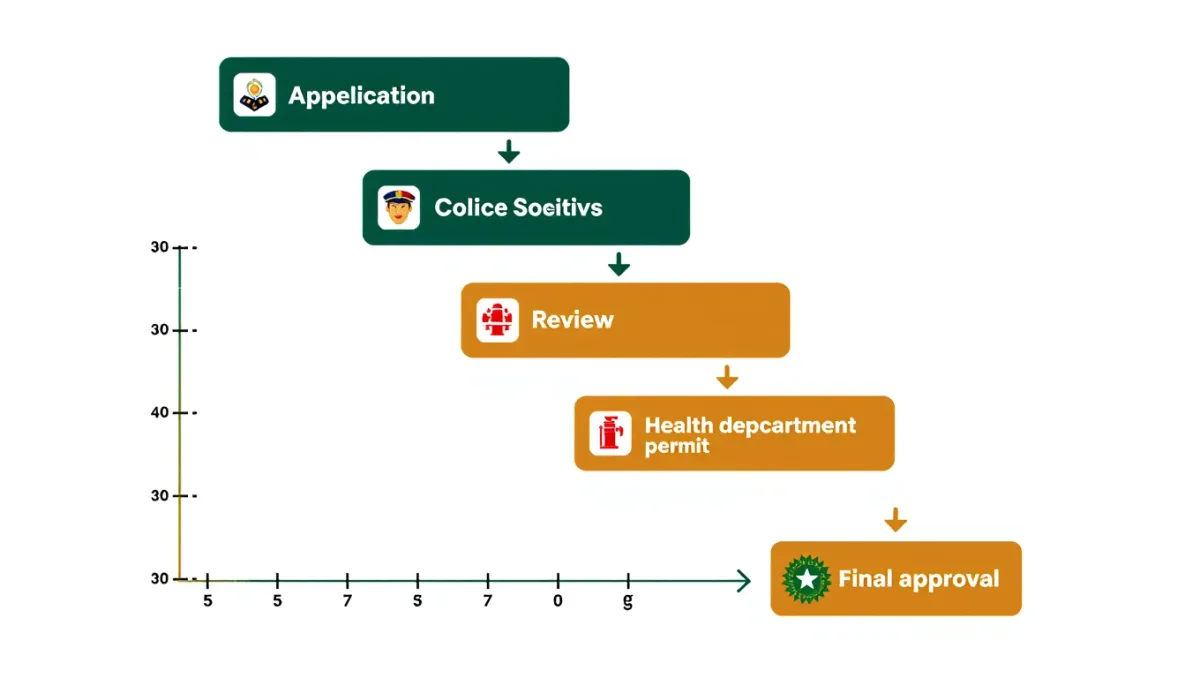
Closing a Tulsa street for a block party starts with an application to the city weeks before the date, not a phone call the day before. The same logic scales upward: a neighborhood festival with tents, amplified sound and food vendors collects permits from at least three separate offices — special events, fire and the Tulsa Health Department — and the sequencing matters more than any single fee. Tulsa's event calendar has grown with the riverfront and downtown investments, and the city's permitting pipeline is the difference between an event that happens and one that gets shut down at 6 p.m. on a Saturday.
This is the working map: which event needs which approval, how long each takes, and where organizers consistently lose time.
When does a block party need a permit?
Any event that closes a city street, alley or even a curb lane requires a right-of-way or street closure approval from the City of Tulsa. A backyard gathering on private property does not; a party that spills onto the pavement does. For a residential block party, the application typically goes in at least two to three weeks ahead, identifies the closure boundaries and hours, and includes signatures or notification from the affected residents. The city routes the request through police and fire review, and approval usually arrives with conditions: barricades at each end, a maintained emergency lane, and no permanent structures.
Two details decide most block party applications. Barricades must be actual traffic barricades rather than parked cars, and the city often loans or coordinates them. And closures cannot block emergency access — organizers designate someone to move them instantly if a fire truck appears, which is written into the approval and enforced.
What triggers the fire and police review?
Scale and infrastructure pull in the Tulsa Fire Department. Tents above a size threshold require a permit and a flame certificate showing the fabric's fire rating. Generators, open flame, cooking under canopies and any structure holding the public require inspection. Amplified sound runs through the city's noise rules, which function on complaint enforcement — meaning a festival with live music on a residential street negotiates hours in advance rather than testing the tolerance of the nearest precinct. Events on private property are not exempt: occupancy loads, exits and electrical setups fall under fire code once the public is invited.
Police involvement scales with expectations. An organized event with traffic control needs needs off-duty officers or approved traffic plans; a parade or run requires a full route closure plan with intersections managed in sequence. The city's special events office consolidates the intake for larger events precisely so organizers are not filing separately with each department.
What does the Health Department require for food?
Anyone selling or serving food to the public in Tulsa County deals with the Tulsa Health Department. A licensed caterer or food truck carries its own permit and can operate at an event with documentation on file. But the church bake sale and the neighborhood barbecue selling plates sit in different categories — temporary food service permits exist precisely for short events, with requirements covering handwashing stations, food temperature control and booth construction. Nonprofit and occasional events get streamlined paths, but the health inspector's visit is real, and events have been halted over handwashing setups alone.
The safe rule for organizers: every vendor who handles food files its own paperwork, and the event application lists them all. An unlisted food booth is the fastest way to convert a routine inspection into a citation.
What about parks and private venues?
Location changes the pathway. An event in a city park books through the parks reservation system — pavilions and event spaces rent by the day — with larger gatherings adding the special events layer on top. River Parks territory routes through the River Parks Authority. Private venues handle occupancy internally, which is why so many Tulsa fundraisers land in rented halls: the venue's existing licenses absorb much of the compliance load, and the organizer carries only liquor, insurance and health questions, if any.
Insurance is the sleeper requirement. Larger events are asked to name the city as an additional insured on a liability policy; neighborhood events under a certain scale often fall below the threshold, but every organizer should ask the special events office directly rather than assume, because the requirement attaches to expected attendance and infrastructure, not to the cause being celebrated.
Recurring events and neighborhood sponsors
Organizers planning an annual event should know the system rewards track records: a neighborhood association or civic club that has run the same festival for years renews through a shorter path than a first-time applicant, because the departments already hold the site plan, the insurance certificate and the vendor list. Sponsorship matters too — events held under a nonprofit's umbrella inherit that organization's standing, which is why so many Tulsa street festivals run through a neighborhood association, a main street program or a chamber affiliate rather than an ad hoc committee. First-time organizers can borrow that structure: partner with an established sponsor for year one, build the file, and the second year runs on history.
How far ahead should organizers start?
Working backward from the date: large festivals with closures, stages and food courts need months, because departmental review, insurance and vendor collection all run in parallel. A standard block party with a closure and a few food booths is comfortable at three to four weeks out. Anything inside a month risks missing the review cycle, and the city has no obligation to expedite. The fall festival season concentrates applications into August and September; spring runs similarly heavy.
What to watch next: Tulsa's special events calendar fills against the city's own programming downtown and on the riverfront, and competing closures get arbitrated weeks in advance. For neighborhood organizers, the practical move is a conversation with the special events office before the application — the fees are rarely the obstacle; the timeline is.