A Tulsa City-County Library card is free to any Tulsa County resident, and it unlocks a services catalog most cardholders never open: downloadable e-books and audiobooks, streaming video, genealogy archives, one-on-one literacy tutoring, meeting rooms and computer access across a system of more than 20 branches. As of 2026, the library remains one of the few institutions in the metro where the answer to a long list of everyday questions costs nothing but a visit.
Here is a working inventory of what the system offers, who each service is for, and how to actually use them.
What can you borrow beyond books?
The physical collection is the visible layer. The digital layer is where a card works hardest: through the library's apps, cardholders check out e-books and audiobooks to a phone or tablet, place holds across the whole county system, and stream films and documentaries through licensed services the library pays for on members' behalf. Waitlists for digital titles run independently of physical copies, and popular releases often appear in both formats on publication day.
Branches also lend hardware and practical items that vary by location — laptops and mobile hotspots for home internet access, and early-literacy kits designed by the children's team. Availability differs branch to branch, so the useful habit is calling the local branch before assuming an item is on the shelf, or checking the online catalog, which covers every location at once.
Genealogy: the collection researchers travel for
The library's genealogy collection is one of the largest in the region, and it is a genuine asset for anyone tracing family lines through Oklahoma, Arkansas, Texas and the broader south-central United States. Cardholders and visitors can use census microfilm, county records, cemetery compilations and subscription genealogy databases from library computers, and the specialized staff handle research questions that general reference desks cannot. For families with Oklahoma land-run, oil-boom or Dust Bowl migrations in their past, the local holdings routinely resolve dead ends that national websites cannot.
The research center runs classes on getting started, which matters because genealogy databases reward technique: knowing how to search by name variants and county lines turns an hour of frustration into a few targeted lookups.
Literacy services for adults
A quiet workhorse of the system is its adult literacy program. Volunteer tutors, trained and matched through the library, work one-on-one with adults building reading skills, learning English as a new language, or preparing for citizenship interviews. Sessions are free, confidential and scheduled around work hours — a design that reflects the reality that most learners juggle jobs and family. Employers and churches across the metro refer learners to the program, and the tutoring relationships often run for years.
For job seekers, branches pair that service with resume help, computer classes and access to employment databases — a stack of services that functions, in practice, as the metro's free career center.
Rooms, printing and everyday logistics
The unglamorous services carry real value. Meeting rooms at most branches are reservable at no charge for community groups, which is why so many Tulsa neighborhood associations, scout troops and study groups hold their meetings in library buildings. Public computers, scanning, and low-cost printing cover the paperwork needs of residents without home offices. Tax season brings free preparation sites to selected branches through volunteer programs each spring, and the summer reading program — one of the largest annual events the system runs — keeps school-age readers engaged through June and July with prizes rather than worksheets.
Children, teens and homework help
For families, the children's desks run programming that functions as free childcare for an hour at a time: story times on weekday mornings, after-school clubs, and teen spaces where the seating, games and rules are built for adolescents rather than polished to suit adults. During the school year, branches host homework help sessions staffed by volunteers, and the school liaison work with Tulsa-area districts means teachers can coordinate library visits and card drives so every student in a classroom holds a working card by the end of September.
The summer reading program deserves its own mention because of its scale and its design: readers log minutes rather than titles, prizes come from local businesses, and the incentive structure targets the well-documented summer slide that hits low-income students hardest. Registration runs through the branches and the app, and participation requires nothing beyond a card.
What the digital divide looks like from a branch
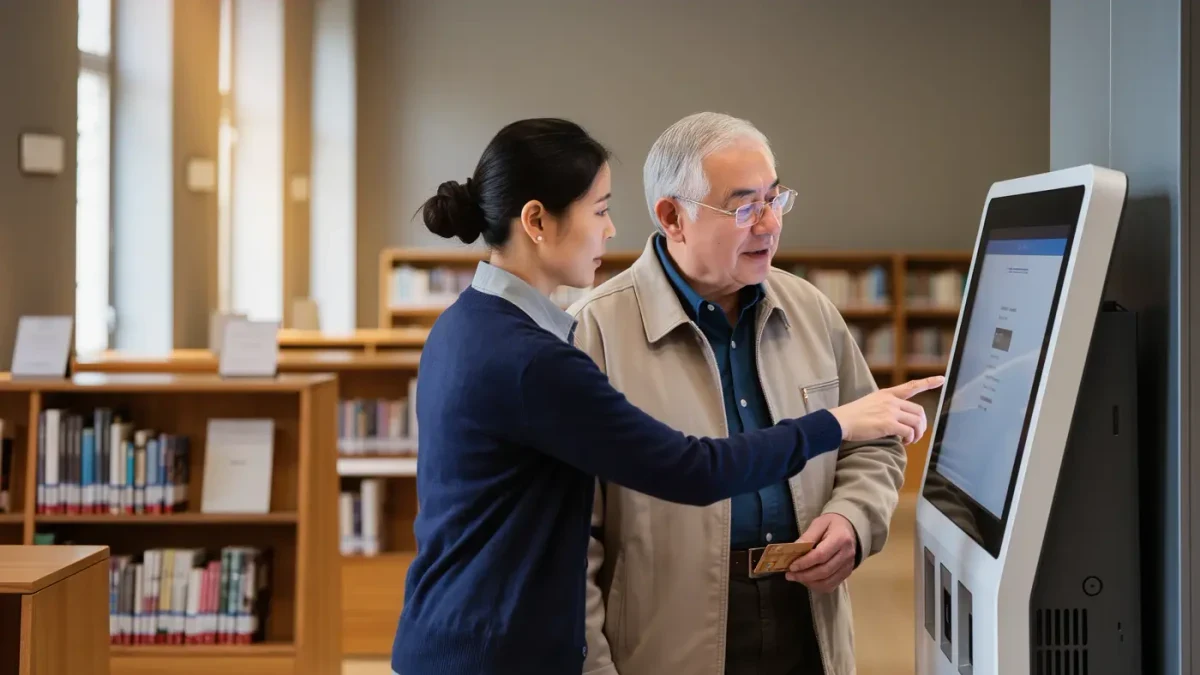
A significant share of daily branch traffic has nothing to do with borrowing at all. Residents use library computers to file unemployment claims, complete benefit applications, print lease documents and join telehealth appointments. The loanable hotspots extend that function to homes without broadband, and staff have become, in practice, the metro's front-line help desk for government portals that assume every household has an up-to-date laptop and a scanner. That role rarely appears in budget discussions, yet it is the reason branches close late on weeknights.
How do you get a card?
Any Tulsa County resident can register for a card at any branch with photo ID and proof of address; the process takes minutes, and children can hold cards under a parent or guardian's account. Digital-only registration lets new users reach the e-book and database collections immediately, with full borrowing privileges once an in-person stop confirms residency. Cards are renewed on a cycle so the system can purge addresses that no longer receive mail — the single most common reason a long-dormant card stops working.
The library's funding comes largely from a dedicated property tax millage approved by county voters, which is why services scale with county support and why millage votes are worth watching. Federal support for libraries flows through the Institute of Museum and Library Services, which administers grants that states pass on to local systems.
What to watch next: branch event calendars refresh monthly, and the system's author talks, job labs and children's programs fill fastest in January and June. For a household budget under pressure, the card is the cheapest entertainment and education subscription in Tulsa County — the price being only the drive to the nearest branch.