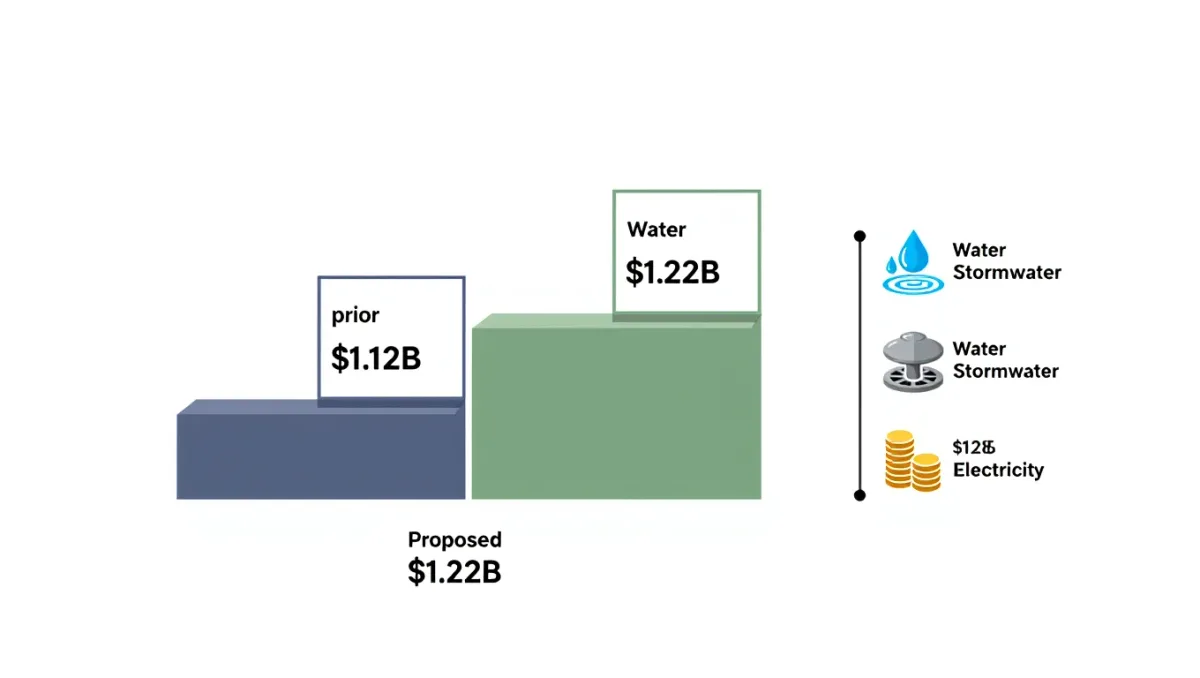
Mayor Monroe Nichols presented his proposed FY2026-27 budget and capital plan to the Tulsa City Council on April 23, 2026 — a package totaling about $1.22 billion, with expected utility bill increases built into the funding plan, per Tulsa Flyer's coverage of the proposal.
The number is the headline; the utility warning is the political story. A $1.22 billion general budget puts Tulsa city government past the $1.2 billion mark for the first time, growing from the roughly $1.12 billion budget adopted two years earlier.
What the proposal prioritizes
The mayor's second budget continues the themes of his first: street and drainage investment, public safety staffing, and neighborhood-level services, funded in part through utility rate structure changes rather than property tax hikes. The pieces that matter to most households:
- Total package: about $1.22 billion for FY2026-27, per the April 23 proposal
- Funding: expected utility bill increases, per Tulsa Flyer
- Capital plan: multi-year infrastructure projects bundled alongside the operating budget
- Process: council budget hearings through May, adoption before the June 30 fiscal deadline
Why utilities instead of taxes
Tulsa's charter-driven revenue structure limits the city's options. Property tax rates are largely spoken for by schools, the county and the city's bonded debt, and sales tax is voter-approved by package. That leaves user fees — water, sewer, stormwater — as the adjustable lever, because city-owned utilities can rate-fund infrastructure without a public vote. The trade is visibility: utility increases arrive as smaller monthly changes rather than one headline number, which is why budget-watchers parse the rate ordinances as closely as the budget book.
How the council changes a mayor's budget
The Council cannot rewrite a mayoral budget line by line; it adopts, cuts or amends by ordinance. In practice, Tulsa councils have concentrated their influence on the margins — council-directed additions funded from reserves — while accepting the overall structure. With all nine seats on the August 25 ballot, expect the budget hearings to double as campaign forums, and expect amendments targeted to districts where incumbents face challengers.
The budget also lands in a changed state context: Oklahoma's $12.8 billion FY2027 budget holds most state agency budgets flat, which pushes costs — jail contracts, road matches, health services — back onto city budgets rather than relieving them.
What to watch next
Council budget committee hearings through May and June, the utility rate ordinances filed alongside the budget, and the council's final vote before the June 30 fiscal year deadline. The rate ordinances, not the budget headline, are where a household's actual monthly number gets set.